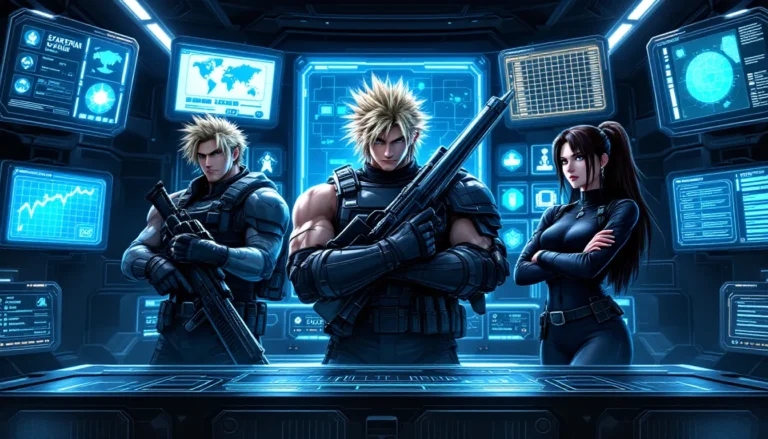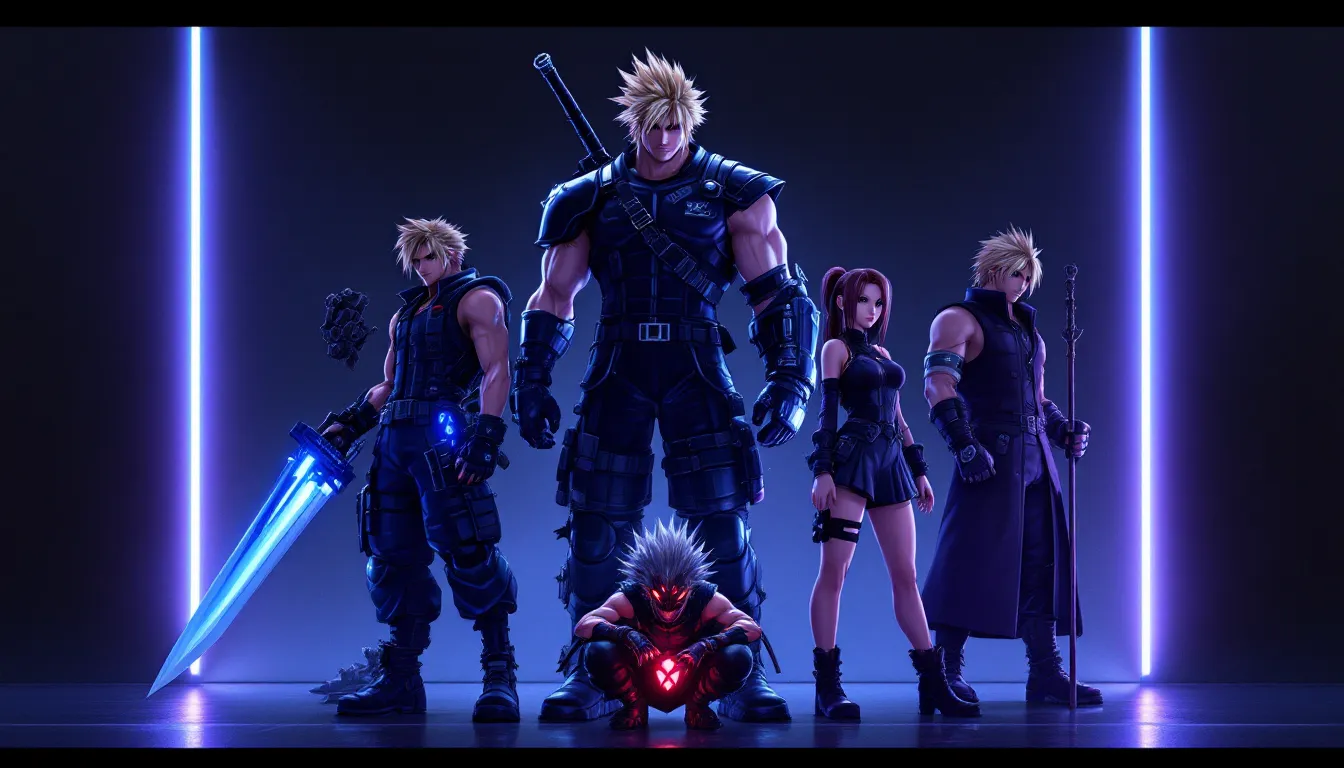
Final Fantasy VII Remake has revolutionized how we experience the beloved classic, and nowhere is that more evident than in the roster of playable characters. Whether you’re a veteran of the original 1997 release or jumping in fresh with the modern remake, understanding each character’s strengths, combat style, and narrative role is crucial to mastering Midgar. From Cloud’s iconic Buster Sword to Aerith’s devastating magic, the playable cast brings distinct playstyles and emotional depth to every encounter. This guide breaks down the complete roster, their abilities, progression systems, and how to build the perfect party for any challenge you’ll face in the game.
Table of Contents
ToggleKey Takeaways
- Final Fantasy 7 Remake features six playable characters—Cloud, Barret, Tifa, Aerith, Red XIII, and Yuffie—each with distinct combat styles, abilities, and narrative depth that require mastering multiple playstyles to succeed.
- Character progression through weapon upgrades, materia customization, and stat enhancements directly impacts combat effectiveness, with the materia system allowing flexible builds regardless of base class limitations.
- Party composition significantly affects encounter success, with optimal team setups varying by challenge type—balanced rosters for story progression, aggressive combinations for boss fights, and crowd-control focused teams for multi-enemy encounters.
- Each Final Fantasy 7 Remake character possesses unique limit break abilities and playstyle identities (Balanced Attacker, Tank, Melee DPS, Magic/Healer, Hybrid Damage, and Speed/Crowd Control) that prevent relying on a single character or default meta strategy.
- Story relationships and party dynamics unlock special linked abilities when characters fight in sync, making narrative investment mechanically rewarding and encouraging experimentation with different character combinations.
- Understanding character synergies, ability interactions, and role-specific strengths separates casual players from competitive enthusiasts, transforming Final Fantasy 7 Remake characters from simple tools into fully realized companions essential for mastering Midgar.
The Main Playable Characters
The core cast of Final Fantasy VII Remake consists of four main playable characters, each bringing something unique to your party. These are the characters you’ll spend the most time with and rotate through most frequently during your journey through Midgar.
Cloud Strife
Cloud is your primary protagonist and the character you’ll control most often. He’s a former member of SOLDIER with a complex backstory that unfolds throughout the game. His defining combat traits include high physical damage output, versatility in both melee and magic roles, and impressive mobility. Cloud wields the iconic Buster Sword early in the game, later upgrading to Hardedge and Mythril Saber as the story progresses. His Limit Break ability, Omnislash, is a devastating multi-hit attack that can single-handedly turn the tide of difficult boss battles. Cloud excels in the “Operator” role when you need consistent damage output, and his ability to switch between aggressive and defensive stances makes him adaptable to any situation. His ATB gauge (Active Time Battle) fills quickly, giving him frequent opportunities to cast spells or use abilities.
Barret Wallace
Barret functions as the party’s tank and primary physical damage dealer. His weapon of choice is a Gatling Gun-type tool that never leaves his arm, a physical manifestation of his role as Midgar’s protector. Barret has the highest HP pool of the playable cast and excels at absorbing punishment while dealing solid damage in return. His Limit Break, Ungarmax, is a rapid-fire cannon blast that scales incredibly well with weapon upgrades and materia enhancements. Barret’s unique positioning mechanic allows him to stand back from the main action, giving him different aggro patterns and tactical advantages. His ATB gauge fills more slowly than Cloud’s, but when it does, his abilities pack genuine impact. Equipping Barret with proper armor and accessory setups is essential for endgame content, as his survivability directly correlates with party success in extended fights.
Tifa Lockhart
Tifa is the team’s sustained DPS specialist and close-quarters combat expert. She channels her martial arts training into devastating combo chains that build her unique Trance meter, which unlocks additional combo finishers. Tifa’s weapon progression, from Leather Gloves through Iron Knuckles to Mythril Claws, directly impacts her attack animation speed and damage output. Unlike other characters, Tifa’s combat flow emphasizes rhythm and timing: hitting buttons in sync with her animation cancels generates massive damage multipliers. Her Limit Break, Peerless, unleashes a flurry of strikes capped with a powerful finishing blow. Tifa is the highest physical damage dealer in the game when piloted optimally, but she requires active management of her positioning since she fights at melee range. Her mobility during combat is exceptional, making her valuable for kiting enemies and avoiding AoE attacks.
Aerith Gainsborough
Aerith serves as the party’s dedicated magic user and healer. She commands the widest spell list of any character, ranging from healing magic like Cure and Regen to offensive spells including Fire, Ice, Lightning, and Aero. Her Limit Break, Healing Wind, is an AoE heal that keeps the entire party topped up during chaotic multi-enemy encounters. Aerith’s weapon variety, Staff, Guard Stick, and Mythril Rod, influences her magic potency and healing effectiveness. Her unique passive ability allows her to build special charge attacks that enable free spellcasts, making efficient mana management less critical than with other spellcasters. Aerith also learns supportive spells that buff the party, making her invaluable during boss fights. Because Aerith fights at medium range, positioning her safely while maintaining healing coverage requires strategic party placement. For fans looking to dive deeper into character aesthetics, Final Fantasy 7 Remake Wallpaper offers stunning visuals featuring all main characters.
Red XIII and Yuffie Kisaragi
Beyond the core four, Final Fantasy VII Remake introduces two additional playable characters who significantly expand party composition options and combat diversity.
Red XIII (Nanaki) joins the party as a hybrid physical and magical damage dealer. This sentient Cetra creature fights with surprising speed, using his large frame and powerful limbs to deliver swift attacks. Red XIII’s weapon upgrades, bone pins and other enhancements, scale with both his physical stats and elemental materia setups. His Limit Break ability transforms him into a more primal form, dramatically increasing his damage output for several turns. Red XIII excels at applying status effects through his special abilities, making him valuable for weakening tough enemies before pushing for burst damage. His moderate HP pool and balanced offensive stats make him a safe middle-ground character for players wanting something between a tank and a pure damage dealer.
Yuffie Kisaragi is a late-game addition who brings unmatched mobility and crowd-control capabilities. Her shuriken weapon and nimble fighting style make her the fastest character in the game, filling ATB gauges at breakneck speeds. Yuffie’s combat mechanics revolve around ninjutsu abilities that manipulate enemy positioning through knockback and stun effects. Her Limit Break, Ochu Dance, generates significant ATB for the entire party while dealing respectable damage. Yuffie is the premier choice for managing large groups of enemies and breaking enemy formations. While her raw single-target damage doesn’t match Tifa’s sustained output, her crowd-control capabilities make her mandatory for certain encounters. Her moderate HP makes careful positioning essential, but her evasion stats are the highest in the game, rewarding skilled dodging and tactical spacing. Final Fantasy 14 Characters showcase similar depth in character design across the broader Final Fantasy universe.
Character Development and Story Arcs
The Remake doesn’t just give you six characters to control, it crafts individual narrative arcs for each that fundamentally enhance the emotional weight of the story.
How Character Roles Have Evolved
Final Fantasy VII Remake deepens character motivation and personality in ways the original couldn’t. Cloud struggles with identity and purpose, questioning whether his memories are real or implanted SOLDIER conditioning. Barret transforms from a one-dimensional eco-terrorist into a complex father figure wrestling with his ideology and raising Marlene. Tifa’s role expands beyond the love interest archetype: she becomes a grounding force for Cloud while managing her own guilt about past events in Nibelheim. Aerith’s expanded presence throughout the game reveals new dimensions to her character, hinting at knowledge she shouldn’t possess and creating dramatic tension around her ultimate fate. Red XIII gains agency and personality in the Remake that the original never provided, evolving from a side character into a fully realized party member with emotional investment in the story. Yuffie’s addition to the playable roster gives her substantial character development impossible in the original’s linear structure, fleshing out her motivations and relationship with the group. The Remake forces you to engage with these characters’ internal conflicts, making story progression feel earned rather than predetermined.
Deepened Relationships and Party Dynamics
The Remake emphasizes party interplay through field conversations and strategic dependency. Cloud and Barret’s relationship evolves from antagonistic to mutually respectful, driven by shared losses and common purpose. Tifa and Cloud’s complicated history gains nuance through dialogue and unspoken glances that feel authentically character-driven rather than tropey. Aerith and Tifa develop a complex friendship that balances genuine affection with underlying romantic tension, creating organic group dynamics. Red XIII becomes the party’s conscience, questioning their methods and morality in ways that challenge player assumptions. Yuffie’s infectious energy and comedic relief contrast with the party’s trauma, serving as an emotional counterbalance during heavy story moments. These relationships directly impact combat through “linked abilities”, specific character combinations unlock special combo finishers when party members fight in sync. Understanding character dynamics isn’t just lore enrichment: it’s mechanically rewarding. The game encourages experimentation with different party combinations to discover these relationship-based abilities, making story investment tangible in gameplay.
Combat Mechanics and Character Abilities
Every character in Final Fantasy VII Remake fights fundamentally differently, which is crucial for mastering challenging content.
Unique Playstyles and Job Classes
The Remake doesn’t use traditional job classes, but instead gives each character distinct playstyle identities through their abilities and stat distributions. Cloud operates as a “Balanced Attacker,” maintaining solid offensive and defensive options. Barret functions as a “Tank/Ranged Damage,” keeping distance while absorbing aggro. Tifa excels as a “Melee DPS,” requiring active engagement and precise timing for maximum output. Aerith plays as a “Magic/Healer,” managing resource consumption and positioning. Red XIII bridges “Hybrid Damage,” contributing physical and magical pressure simultaneously. Yuffie specializes as “Speed/Crowd Control,” controlling battle pace through mobility and enemy positioning. This diversity forces you to learn multiple playstyles rather than defaulting to a single meta. During boss fights, switching between characters becomes essential, you can’t win by piloting Cloud exclusively. The game teaches you to appreciate each character’s strengths through encounter design that punishes narrow tactical approaches. Recent gaming guides on IGN frequently highlight how character diversity in modern RPGs like Remake separates casual players from competitive enthusiasts.
Materia System and Customization
Materia forms the backbone of character customization in Final Fantasy VII Remake. These crystallized magical gems slot into weapons, armor, and accessories, fundamentally altering character capabilities. Magic materia grants spellcasting abilities regardless of base class, you can make Cloud an elemental specialist by slotting Fire, Ice, Lightning, and Wind materia. Command materia unlocks unique abilities like Healing or Chakra that don’t consume mana. Stat materia boosts core attributes, essential for pushing characters beyond their base limitations. Summon materia calls powerful beings into battle, providing both damage and strategic utility. The genius of this system lies in its flexibility: Barret can become an offensive powerhouse through materia stacking, or you can build him as a secondary healer. Tifa can frontload magical damage even though being a physical-focused character. Customization depth means there’s no single “correct” build, experimentation is rewarded, and creative materia combinations often outperform cookie-cutter setups. Resource management matters significantly: you have limited materia slots and must choose between coverage and specialization. Building for specific boss encounters (stacking fire materia against ice-weak enemies, for example) separates optimized parties from generic ones. For deeper tactical understanding, Final Fantasy Tips offers strategy breakdowns for maximizing party potential.
Character Progression and Leveling
Leveling characters in Final Fantasy VII Remake feels natural and rewarding, avoiding the grinding tedium that plagued some classic RPGs.
Weapon Upgrades and Equipment
Each character’s weapon directly impacts their combat effectiveness and unlocks new abilities. Cloud’s weapon progression, Buster Sword → Hardedge → Mythril Saber → Black Materia, each unlocks different limit break finishers and passive bonuses. Weapon upgrades aren’t purely numerical increases: they fundamentally change how moves execute. Upgrading Cloud’s Buster Sword at accessory shops grants passive bonuses like increased critical chance or stagger buildup acceleration. Barret’s weapon upgrades reduce cooldown on his cannon attacks and increase magazine capacity for sustained fire. Tifa’s glove upgrades directly speed her attack animations, enabling faster combo chains and Trance meter buildup. Aerith’s staff upgrades increase magic potency and mana recovery rate, making her healing more efficient. The progression system encourages you to upgrade each character’s arsenal rather than funneling resources into a single favorite. Equipment choices matter significantly for endgame content, facing Shinra mansion bosses requires carefully optimized gear with specific materia setups tailored to encounter mechanics. Armor selections influence physical and magical defense separately, forcing thoughtful protection allocation rather than just equipping whatever has the highest defense number. Accessories provide crucial passive bonuses: +15% physical damage, increased elemental materia potency, shortened status effect duration, or ATB gauge acceleration. Understanding synergies between equipment, materia, and character abilities separates casual players from those pursuing perfect builds. For fans seeking deeper character lore, Squall Final Fantasy explores how character development has evolved across the Final Fantasy franchise.
Building Your Ideal Party Composition
With six playable characters and unlimited party configuration options, finding your ideal three-person team requires understanding encounter demands and synergy.
Best Team Setups for Different Challenges
For general story progression, Cloud, Barret, and Aerith provides balanced coverage: Cloud handles consistent damage, Barret tanks and contributes ranged pressure, and Aerith maintains healing while dealing magic damage. This composition survives most content without requiring optimization.
For aggressive endgame content, Cloud, Tifa, and Aerith maximizes burst damage while maintaining healing. Tifa’s sustained DPS combined with Cloud’s versatility overwhelms enemies quickly, while Aerith keeps the team alive. This setup struggles against multi-enemy encounters due to limited crowd control.
For multi-enemy encounters, Cloud, Yuffie, and Aerith controls enemy positioning through Yuffie’s knockback abilities while dealing solid damage and maintaining support. Yuffie’s speed prevents enemies from focusing on vulnerable party members, making this composition incredibly defensive.
For tank-heavy setups, Barret, Red XIII, and Aerith prioritizes survival and resource management. Red XIII’s hybrid damage prevents over-reliance on Barret’s limited DPS, while Aerith’s healing handles incoming pressure. This composition excels against single-target bosses but struggles with aggressive enemy groups.
For speed-focused runs, Cloud, Tifa, and Yuffie emphasizes ATB gauge accumulation and quick boss kills. Yuffie’s unmatched ATB generation enables frequent ability usage, while Tifa and Cloud leverage this for explosive damage windows. This setup trades defensive stability for offensive momentum.
Character Interactions and Side Content
Final Fantasy VII Remake rewards experimenting with different party combinations through chapter-exclusive interactions and hidden dialogue. Switching Cloud out of the active party for certain chapter segments forces you to master other characters. Barret takes command during tank-focused sections, Tifa during precision combat sequences, and Aerith during magic-heavy scenarios. These forced rotations aren’t artificial padding, they reveal character personality and create memorable moments that wouldn’t exist with permanent team fixation.
Side quests often hint at optimal character combinations through story context. A mission requesting you help injured citizens naturally slots Aerith into the active party for her healing access. Monster hunting objectives benefit from having Red XIII active for his enhanced smell ability to track prey. These quest designs subtly guide composition selection while maintaining player agency.
Character-specific training exercises unlock special abilities and stat bonuses. Completing these optional challenges for each character provides genuine mechanical benefits alongside narrative depth. Final Fantasy VII Remake’s character system rewards engagement with the entire roster: you’ll miss significant power-scaling opportunities and story moments by ignoring anyone beyond your favorite three. All Final Fantasy Games Ranked contextualizes how Remake compares to other entries in terms of character roster depth. Resources like Twinfinite’s comprehensive guides provide detailed party composition recommendations for specific boss encounters that you can reference for particular challenges you’re struggling with.
Conclusion
Final Fantasy VII Remake’s character roster transcends simple combat mechanics: each character tells a distinct story while contributing unique tactical value to your adventures through Midgar. Cloud’s versatility and iconic status make him the narrative anchor, but Barret’s emotional journey, Tifa’s martial mastery, and Aerith’s mysterious depth ensure that no character feels expendable. Red XIII and Yuffie add meaningful complexity to party composition choices, rewarding experimentation and strategic thinking. Understanding character abilities, progression systems, and synergies separates casual players from those who truly master the game’s depth. The beauty of the Remake’s character design lies in its flexibility, there’s no single “correct” way to experience these characters, whether you’re optimizing for endgame bosses, pursuing speedrun times, or simply enjoying the story with your favorite party combination. Investing time into each character transforms them from simple tools into fully realized companions whose strengths and weaknesses create genuine tactical moments. The journey through Midgar becomes more rewarding when you genuinely understand who you’re fighting alongside.