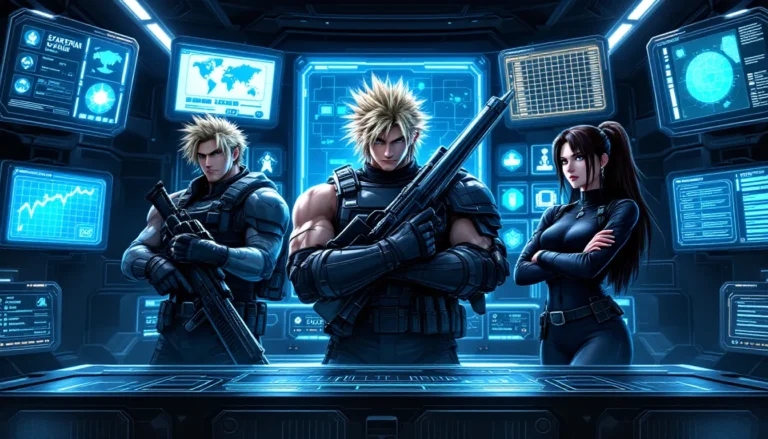
Dark Battlefield V represents the pinnacle of tactical warfare gaming, demanding precision, strategy, and quick decision-making from players who want to compete at any level. Whether you’re jumping into the chaos for the first time or grinding toward competitive ranks, understanding the mechanics, modes, and meta can make the difference between a frustrating session and a dominant performance. This guide breaks down everything you need to know, from core gameplay fundamentals to advanced positioning strategies, to help you dominate the game’s most intense modes. We’ll cover weapon selection, map awareness, class dynamics, and the specific adjustments that separate casual players from those climbing the competitive ladder.
Table of Contents
ToggleKey Takeaways
- Dark Battlefield V demands tactical awareness and positioning strategy in reduced-visibility combat, where map knowledge and audio cues matter more than raw aim alone.
- Master minimap reading, pre-aiming corners, and deliberate movement to avoid static positioning that allows enemies to flank your squad in darkness.
- Squad composition and class distribution directly determine match outcomes—always coordinate role distribution across assault, support, recon, and medic classes for sustained team performance.
- Weapon selection in Dark Battlefield V should match engagement ranges: suppressors for flanking plays, medium-range assault rifles for balanced control, and close-quarters SMGs for the compressed engagements darkness creates.
- Communication through callouts and pings is mandatory for competitive play—establish position references and gadget assignments with teammates before matches to prevent scattered, inefficient team movements.
- Optimize your hardware and graphics settings for 144+ FPS and minimal input lag, since performance responsiveness compounds across hundreds of gunfights to separate consistent winners from average players.
What Is Dark Battlefield V?
Dark Battlefield V is the tactical, high-stakes extension of Battlefield V that emphasizes environmental darkness, reduced visibility, and aggressive positioning as core gameplay pillars. Unlike standard multiplayer modes, Dark Battlefield V matches feature altered lighting conditions, tighter map rotations, and faster time-to-kill (TTK) values that reward aggressive play and punish hesitation. The mode has gained significant traction among competitive players and those seeking a more intense, less forgiving version of traditional Battlefield combat.
The game originally launched in November 2018, and while the player base has evolved considerably, the dark variant has maintained a dedicated following. Players who engage with Dark Battlefield V often appreciate the heightened skill ceiling, the emphasis on communication, and the way these matches demand constant awareness of teammate positions and enemy rotations. If you’re familiar with standard Battlefield V but haven’t tried the dark variant yet, expect faster gunfights, tighter engagements, and less time to react to threats from multiple angles.
Core Gameplay Mechanics and Features
Dark Battlefield V strips away some of the visual clarity you’d find in traditional multiplayer, forcing players to rely on sound cues, minimap reading, and teammate callouts more than ever before. Visibility is dramatically reduced, environmental lighting creates deep shadows, and environmental elements cast darker silhouettes. This makes map control and positioning exponentially more important: you can’t simply out-aim opponents if you don’t know where the threat is coming from.
The fundamentals remain rooted in Battlefield’s core identity: squad-based gameplay, vehicle integration, destruction mechanics, and objective-focused modes. But, the darkness amplifies every element. A mistake in positioning isn’t just punished by a skilled opponent: it’s punished by your complete inability to see the incoming fire until it’s too late.
Map Design and Environmental Elements
Maps in Dark Battlefield V are designed with layered verticality and multiple sightlines that create natural chokepoints and flanking opportunities. Buildings offer cover but also create blind spots. Outdoor areas demand exposed positioning but provide long-range engagement angles. The environmental darkness means that lighting placement becomes tactical, areas near lampposts or with natural light sources become high-risk zones.
Key features of map design include destructible cover that changes throughout a match, reducing options as the game progresses and forcing rotations. Rooftops, basements, and mid-level positioning become critical for team coordination. Players who memorize where light sources exist and where shadows create cover gain an enormous advantage. The three-dimensional nature of these maps means that vertical positioning, holding high ground, is just as important as flanking routes along the ground level.
Environmental audio also becomes crucial. Footstep clarity, weapon fire direction, and vehicle sounds give away enemy positions when vision is compromised. Teams that coordinate callouts based on audio cues win rounds against teams that rely solely on visual information.
Weapon Systems and Loadout Customization
Weapon selection in Dark Battlefield V is defined by what works in darkness and close-quarters engagements. Submachine guns and shotguns dominate close quarters, where visibility is most limited. Assault rifles bridge the gap between close and medium-range combat, while sniper rifles punish poor positioning but require open sightlines that the darkness often denies.
Attachments matter significantly. Muzzle brakes reduce recoil at the cost of audio signature, firing a weapon without a suppressor broadcasts your position to the entire enemy team. Suppressors add a tactical layer by keeping your position hidden but reducing effective range. Optics choice varies: red dots for speed, scopes for precision, and iron sights for minimal visual obstruction.
Loadout customization extends beyond weapons. Gadgets like motion sensors, healing stations, and ammo packs define squad roles. A single player’s loadout affects the entire team’s ability to sustain engagements, heal damage, and maintain positioning pressure. Misaligned loadouts, for example, running solo damage builds on a squad that needs sustained healing, lead to round losses.
Class Roles and Squad Dynamics
Each class in Dark Battlefield V serves a specific function, and squad composition directly determines match outcomes. The Assault class delivers damage and carries explosive tools for breaking defensive positions. The Support class keeps squads supplied with ammunition and heals teammates through sustained engagements. The Recon class gathers intelligence through spotting and gadgets like motion sensors. The Medic class provides direct healing and revives, allowing downed teammates to rejoin fights.
Squad dynamics go beyond individual performance. A squad with no healer suffers attrition in prolonged engagements. A squad with no ammo can’t sustain fire. Teams that coordinate class distribution across all squads maintain advantages that pure firepower can’t overcome. In Dark Battlefield V’s reduced visibility, this coordination becomes even more critical, you can’t see what your squad is doing, so callouts about class availability and gadget usage determine tactical options.
Game Modes Explained
Dark Battlefield V offers distinct game modes that reshape how teams approach objectives, positioning, and aggression. Understanding each mode’s win conditions and timing is essential for adapting your strategy.
Multiplayer Competitive Modes
Conquest remains the flagship mode, with teams controlling flags spread across the map. In Dark Battlefield V, flag control becomes a dark, contested affair where visibility around objectives is severely limited. Teams must decide between aggressive pushing to cap flags or defensive holding to maintain control. The circular minimap becomes your primary tool, squad positions and nearby flags are your window into the match state.
Roundabout is another popular competitive mode where teams fight for control of a single rotating objective. The mode demands aggressive positioning because the objective location changes, forcing constant repositioning. In darkness, players often lose track of the current objective location if they’re not actively consulting the minimap.
Domination focuses on three central flags in smaller map rotations. The compressed nature of these matches means engagements happen at close range consistently. Darkness amplifies the chaos, spawning near the objective doesn’t guarantee visibility of threats. Teams that hold the center flag gain objective points faster, but holding it in darkness requires coordination to avoid getting overwhelmed from multiple angles simultaneously.
Team Deathmatch strips away objectives entirely, focusing on raw elimination. In Dark Battlefield V, TDM becomes a hunt through darkness where minimap reading and audio cues matter more than in objective modes. Holding high ground and maintaining sightlines is critical because you can’t afford to waste time searching for enemies.
Solo and Co-Op Experiences
While Dark Battlefield V is primarily multiplayer-focused, the single-player campaign and co-op modes offer story-driven experiences set in WWII. The Battlefield 5 Campaign: Uncovering the Emotional Depth of War Stories provides narrative context and allows players to experience the atmosphere in controlled environments without the pressure of competitive play.
Co-op modes let squads tackle objectives against AI opponents, useful for practicing communication without the stakes of ranked play. These modes serve as training grounds, learning map layouts, practicing rotations, and understanding how objectives work in lower-pressure environments before jumping into competitive multiplayer where mistakes cost rounds immediately.
Essential Tips for Beginners
Starting in Dark Battlefield V means adjusting expectations about how visible the world is and how much you can see without relying on your team. New players often struggle because they expect Battlefield V’s standard visibility, then get frustrated by being unable to see enemies at medium range. The darkness isn’t a bug: it’s the core design.
Mastering Movement and Map Awareness
Movement in darkness requires deliberate, purposeful positioning. Running directly toward objectives is tempting but suicidal, you’ll be exposed to angles you can’t see. Instead, use cover, stay against walls, and clear angles methodically. Pre-aim corners and common defensive positions because you won’t have time to react if an enemy is already holding that angle.
Map awareness in Dark Battlefield V starts with constantly checking the minimap. The minimap shows squad positions, flag locations, and enemy contacts spotted by your team. Glancing at the minimap between engagements tells you where threats should be coming from. Audio cues supplement this, footsteps, weapon fire, and vehicles all indicate enemy positions. Develop the habit of listening as much as looking.
When spawning, take seconds to orient yourself. Where’s the objective? Where are your squadmates? Are there nearby threats? Don’t immediately sprint to action: that’s how you get ambushed in darkness. Move deliberately, check corners, and engage only when you have positional advantage.
Building Effective Loadouts
Beginners should start with loadouts that forgiving and suit their playstyle. If you prefer aggressive rushing, run an SMG with a suppressor for stealth and a shotgun as secondary for panic situations. If you prefer medium-range control, pick an assault rifle with a reflex sight and a semi-auto pistol for finishing wounded enemies.
Gadget selection matters. New players benefit from motion sensors (Recon) to detect enemies before engaging, ammo packs (Support) to never run dry, and medical pouches (Medic) to sustain themselves. Explosive gadgets like grenades help, but they’re less forgiving if you misjudge distances in darkness.
Avoid overcomplicating loadouts. One primary weapon, one secondary, one gadget, pick tools that do one thing well. Master the basics before experimenting with niche builds.
Communication and Team Coordination
Communication in Dark Battlefield V isn’t optional: it’s mandatory. Using voice chat to call out enemy positions, gadget availability, and intended rotations separates winning teams from losing ones. New players who don’t have a regular squad should still communicate through team chat and by pinging the minimap.
Key callouts include direction (“enemy north”), range (“200 meters”), and number of enemies (“two contacts”). Use landmarks, “by the red building” works better than vague direction references. When you spot an enemy, report immediately so teammates can react before the enemy relocates.
If you’re playing with a squad, establish simple calls before matches start. Decide how you’ll call positions, what gadgets each player brings, and what the primary objective is. Simple coordination like “we’re taking the north flag” prevents teammates from splitting up and getting picked off individually.
Advanced Strategies for Experienced Players
Experienced players know that Dark Battlefield V’s meta shifts with patches and updates. BFV Updates: Discover the frequently address balance, and staying current with changes is essential for maintaining competitive advantage. What worked last month might be obsolete after a TTK adjustment or weapon rebalance.
Meta Loadouts and Weapon Selection
The current Dark Battlefield V meta favors weapons with tight spread and manageable recoil. The Sten Gun dominates close quarters with incredible TTK in darkness where ranges are compressed. The Sturmgewehr 1-5 controls medium range effectively, balancing damage and accuracy. For aggressive plays, the Combat Knife variants provide instant eliminations if positioning is perfect, high risk, high reward.
Suppressed weapons are meta for flanking plays: they eliminate audio signature, allowing coordinated teams to collapse on positions without alerting defenders. Conversely, unsuppressed High-Powered Rifles work when holding defensive positions where you can afford the sound signature, the range advantage outweighs the risk.
Attachment selection follows principle: match your engagement range. Close-quarter hunters use grips for stability and iron sights for speed. Medium-range players choose reflex sights and compensators. Long-range holdouts use scopes and brakes for precision.
Gadget choices in the meta lean toward utility: spotting scopes provide information without exposing position, ammo resupply stations sustain squad firepower, and motion sensors defend positions. Damage-focused gadgets like grenades are situational, they’re powerful in coordinated attacks but predictable in static defense.
High-Level Positioning and Rotations
Advanced positioning in Dark Battlefield V means understanding not just where to hold, but when to rotate away from that position before enemies collapse on it. Holding a strong position too long gets your squad surrounded and eliminated. The best defenders predict when the enemy will flank, then rotate preemptively to take up new strong positions.
Rotations follow natural map flow. If you’re holding the north objective, enemies will likely push from the east and west simultaneously, so position squad to cover those vectors. When you sense pressure building, move to secondary positions that maintain objective control but limit flanking angles. Never stay in one spot long enough for enemies to pinch you from multiple directions.
Vertical positioning wins engagements in darkness. Second-floor positions limit angles enemies can attack from, forcing them to move up narrow staircases where they’re exposed. Rooftop positions work similarly, defenders force attackers into predictable paths. But, vertical positioning can trap squads if escape routes get cut off, so always maintain one exit strategy.
Choke points are your friends. Narrow corridors, doorways, and bridges force engagement in tight angles where positional advantage matters more than pure firepower. Control these naturally, and you control the flow of the entire map.
Dominating Specific Game Modes
Conquest demands split focus, defend current flags while prepping to push next objectives. Experienced teams hold two flags securely, establish spawn pressure against the enemy-controlled flag, and maintain map position so rotations are quick when flags flip. In darkness, rotation speed depends on pre-planned routes: winging it through darkness gets people separated and eliminated.
Roundabout requires aggressive timing. The objective rotates on a schedule, and teams that position squads at the next objective location before it activates get positional advantage for the cap. Reading the minimap and minimap timers tells you where the next objective spawns, get there early, and the enemy must assault your prepared defense.
Domination in darkness becomes a center-flag war. The team controlling the middle flag generates points fastest, so dominant teams often contest the center relentlessly. Positioning squads around the center flag with overlapping fields of fire and gadget support lets one squad hold against numerical superiority. The key is preventing flanks, defending the center against frontal assault works if no enemy comes around the side.
Common Mistakes and How to Avoid Them
Even experienced players fall into predictable mistakes that cost rounds in Dark Battlefield V. Recognizing these patterns and correcting them separates average players from consistent winners.
Positioning Errors
The biggest positioning mistake is holding static locations too long. Darkness makes it harder for enemies to find you initially, but patient, searching enemy teams will eventually locate your squad. The longer you sit in one spot, the more likely enemies are to flank you. Rotate every 30-60 seconds, move to adjacent strong positions that maintain map control without becoming predictable.
Another critical error is overextending without support. Running toward objectives alone, even if you’re confident in your gunplay, leaves you vulnerable to being surrounded. Darkness amplifies this, you can’t see multiple enemies approaching simultaneously, and by the time you hear them, escape routes might be cut off. Always maintain visual or audio contact with at least one teammate.
Not clearing angles before pushing is punishing in darkness. In standard Battlefield, you might get away with aggressive pushing because visibility lets you react quickly. In Dark Battlefield V, pushing a corner without pre-aiming lets defenders who are already holding that angle kill you instantly. Slow down, anticipate where enemies should be, and aim before you reach danger zones.
Ignoring high ground is a rookie mistake that experienced players exploit ruthlessly. Holding rooftops and second floors forces enemies into specific paths to assault your position. Completely ignoring elevation advantage means enemies will hold it, use it to rain fire on your squad, and force you into terrible positions. Always contest high ground, or accept that enemies will use it to pin you down.
Resource Management Issues
Running out of ammunition in the middle of engagements because you didn’t manage Supply Drops or didn’t pack an ammo-carrying teammate is preventable but common. Designated Support players should maintain ammo stations near squad spawn points. Players should count ammunition during longer engagements and request resupply before they’re completely dry.
Not using gadgets strategically wastes potential advantage. A motion sensor that’s placed in a random location might catch one enemy: motion sensors placed at likely enemy approach routes catch entire flanking attempts before they develop. Similarly, healing stations placed next to teammates matter, placing them 20 meters away doesn’t help the team when they’re being shot. Position gadgets where they solve the immediate problem, not where they look cool.
Overusing aggressive gadgets when your team needs utility is another error. One player carrying grenades works fine: five players with grenades means nobody’s carrying ammo or providing healing. Squad composition matters, decide roles before matches start so gadget variety covers all bases. How many people are playing Battlefield 5 at high levels underscores how competitive the environment is: playing against better squads punishes these mistakes immediately, so learning proper resource allocation quickly becomes necessary for rank advancement.
Ignoring the minimap creates blindness in darkness. You can’t see what’s not immediately in front of you, but the minimap shows squad positions, spotted enemies, and flag status constantly. Players who don’t glance at the minimap every few seconds miss crucial information about incoming threats and objective status. Make it a habit, check the minimap between engagements, every time you spawn, and whenever you hear combat nearby.
Performance Optimization and Settings
Performance in Dark Battlefield V directly impacts competitiveness. Poor framerate, input lag, or visibility settings that make darkness even darker put you at a disadvantage against players running optimal configurations. Spending time optimizing your setup compounds your mechanical skill with technical advantage.
PC Graphics and FPS Tuning
PC players have the most flexibility for optimization. The ideal target is 144 FPS minimum at competitive settings, this smoothness gives you reaction time advantage and consistent input response. Achieving 144 FPS requires balancing settings:
- Resolution: 1440p is sweet spot for visibility and performance. Some competitive players drop to 1080p for maximum FPS, sacrificing visibility clarity for smoothness. Test both and choose what feels responsive.
- Graphics Preset: Start with Medium or High preset, then adjust specific settings. Disable motion blur and film grain, these add nothing and hurt visibility in darkness.
- Shadows: Disable shadows entirely or set to lowest. Shadows create harsh transitions in darkness, making spotting enemies harder. Losing shadow detail costs you nothing relevant.
- Ambient Occlusion: Disable. It darkens corners further, making darkness even harder to navigate.
- Render Distance: Keep at maximum so distant enemies rendering smoothly prevents pop-in surprises.
Monitor choice matters. 144Hz minimum with sub-5ms response time is the baseline. 240Hz monitors are even better, the smoothness advantage in twitchy gunfights is noticeable. Curved monitors with 1ms response time (like modern gaming displays) reduce input latency noticeably.
Mouse sensitivity should feel natural, not too fast that small adjustments overshoot, not too slow that flicking between targets is sluggish. Most competitive players run sensitivity between 400-800 DPI with in-game sensitivity around 50%. Start there, adjust by 5% increments until aiming feels smooth.
Console Settings and Controls
Console players on PS5 and Xbox Series X have fewer optimization options but can still improve responsiveness. Settings to adjust:
- Display Settings: Switch to Performance Mode if available, prioritizes 120 FPS over visual quality. The smoothness is worth the visual trade-off.
- Motion Blur: Disable completely. Motion blur is never useful in competitive play.
- Field of View: Maximum available setting. Wider FOV shows more of the battlefield, crucial for spotting threats in darkness.
- Control Sensitivity: Console players should experiment similarly to PC, find sensitivity that lets you aim precisely without overshooting. Typically 60-80% is range most comfortable with.
- Dead Zone: Lower dead zone to 5-8%. Smaller dead zone makes aim more responsive, though too low causes stick drift issues. Balance precision with stick reliability.
Controller choice matters on console. Competitive players often use controllers with remappable back paddles or custom builds. This lets you jump, slide, or crouch without removing thumbs from sticks, crucial for maintaining aim while moving evasively.
Console players should also optimize TV/monitor settings. Enable Game Mode if available, disable all post-processing and motion smoothing features. These features add input lag that competitive play can’t afford. The response time difference between Game Mode and standard mode is often 20-30ms, significant enough to lose gunfights.
Let’s review the essential competitive setup: Metacritic scores show that Battlefield V reviews emphasize responsiveness and performance as critical factors. Investing in monitor, mouse, or controller quality pays dividends across all your matches. A 5ms input lag improvement might sound minor, but it compounds across hundreds of gunfights, those marginal wins add up to ranking advancement.
Conclusion
Mastering Dark Battlefield V requires balancing mechanical skill with tactical awareness, and recognizing that the darkness itself is the core mechanic you’re learning to navigate. The weapons, classes, and modes we’ve covered are frameworks, your success depends on adapting them to your playstyle and your team’s composition.
Starting players should focus on fundamentals: understanding map layouts through repeated play, learning where light and shadow create natural defensive positions, and communicating basic callouts with teammates. Grinding through lower ranks with intentional practice on these fundamentals accelerates improvement more than raw mechanical skill alone.
Experienced players should stay updated on balance changes and meta shifts, because Esports news from Dexerto and similar sources often catch competitive shifts before they become widely known. Testing updated loadouts in casual matches before bringing them into ranked play prevents bad surprises when your go-to setup is suddenly obsolete. Understanding how game guides from Twinfinite approach tier lists and weapon rankings provides perspective on competitive viability, though always verify recommendations against current patch notes.
The difference between stalling at a rank and climbing steadily is recognizing when you’re making the mistakes outlined earlier, then actively correcting them. Is Battlefield 5 Dead? The Surprising Truth About Its Player Base and Future addresses the question of whether the game’s community is thriving, and the answer is yes, particularly for competitive players who engage with Dark Battlefield V’s intensity. Your climb through ranks contributes to that community’s ongoing vitality.
Dark Battlefield V punishes hesitation and rewards confident positioning, so once you understand the fundamentals, trust your training and execute deliberately. The darkness isn’t an obstacle to overcome: it’s the arena where skill truly separates from luck.