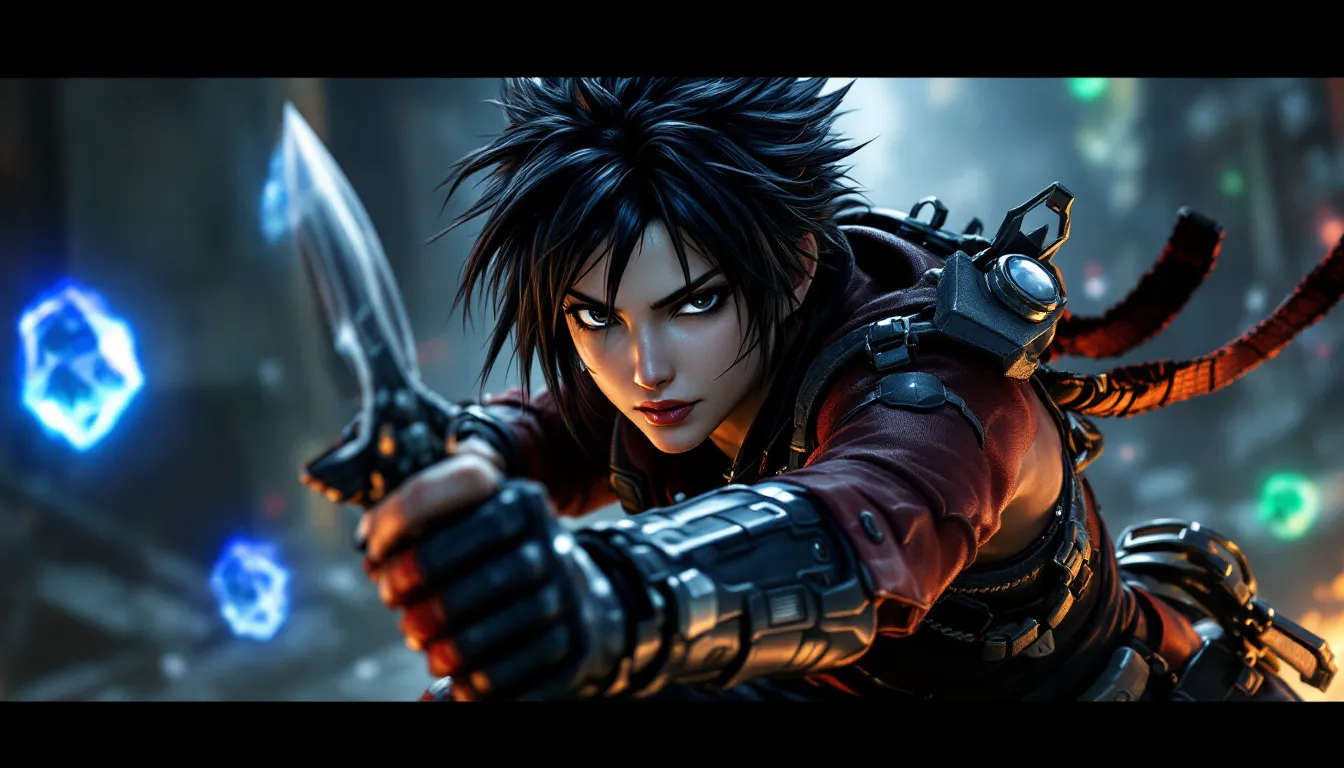
Yuffie Kisaragi is one of Final Fantasy’s most unforgettable characters, a spirited ninja with a sharp tongue, quick materia-stealing hands, and surprising depth beneath her cocky exterior. Whether you’re revisiting the original FF7, diving into the Remake, or waiting for Rebirth’s full release, understanding Yuffie’s mechanics, abilities, and role in the story is essential for getting the most out of these games. She’s not just a damage dealer or utility slot: she’s a transformative party member who shifts how you approach combat and storytelling. This guide breaks down everything you need to know about Yuffie Kisaragi, from her canonical story arc to her current competitive meta and optimal build strategies across all platforms.
Table of Contents
ToggleKey Takeaways
- Yuffie Kisaragi is a multidimensional ninja character whose arc evolves from a materia-stealing thief to a loyal party member across original FF7, Remake, and Rebirth iterations.
- In original FF7, Yuffie is an optional recruit found in random forest encounters on the western continent, but becomes mandatory in the Remake as part of Midgar’s integrated narrative.
- Yuffie’s combat effectiveness depends on proper materia setup and equipment optimization—pairing her high physical DPS with elemental materia combinations maximizes damage output across all game versions.
- Her mechanics evolved significantly from turn-based materia theft (original FF7) to real-time stance-switching in Remake and proficiency-based ability trees in Rebirth, making her a top-tier damage dealer in modern iterations.
- Yuffie’s character design stands out in gaming for prioritizing personality and competence over aesthetic appeal, proving that female characters can be simultaneously annoying, funny, and deeply beloved by players.
- Her optional status in original FF7 influenced how RPGs handle optional recruits, demonstrating that characters can enrich a game without being essential to its core narrative.
Who Is Yuffie Kisaragi?
Yuffie Kisaragi is the Wutai princess, a spirited, sharp-witted ninja obsessed with money, powerful materia, and proving Wutai’s military superiority to the rest of the world. She’s characterized by her quick wit, sometimes annoying bravado, and genuine loyalty to those she considers friends. Her thieving tendencies (especially her obsession with stealing materia) are both a running joke and a core mechanic in her gameplay.
She represents the “rogue” archetype in FF7’s party lineup, but with a personality that stands out even among gaming‘s best-written side characters. Unlike brooding characters who carry tragic backstories, Yuffie’s charm lies in her cheerful complexity, she’s comedic without being one-dimensional, selfish on the surface yet surprisingly compassionate when it matters. Her accent and speech patterns (exaggerated in some translations) reflect her Wutai heritage and add personality to every line of dialogue.
Yuffie’s significance extends beyond gameplay mechanics. She represents a different approach to ninja stereotypes in gaming, rather than the stoic, honorable warrior, she’s a thieving, trash-talking fighter who wins you over anyway. This character depth is part of why fans have been excited to see her expanded role in the Remake and Rebirth iterations.
Yuffie’s Role in Final Fantasy VII
Optional Character Status and How to Recruit Her
In the original FF7 (all platforms: PC, PS1, PS4, Nintendo Switch, and Xbox), Yuffie is a completely optional recruit, you can finish the entire game without ever meeting her. To recruit her, you need to randomly encounter her in the forests around the world map. Specifically, she appears as a random battle encounter in forests on the western continent, and she’ll challenge you alone. After defeating her in combat, she’ll join your party (though she’ll steal some of your materia before rejoining).
Her optional status means many players miss her entirely on first playthroughs. But, once you know where to find her, recruitment is straightforward. She becomes available relatively late in the game but early enough to be useful for the final dungeons and superboss fights. Her value as a party member makes her recruitment worthwhile for most playstyles.
In the FF7 Remake (PS4/PS5), her recruitment is part of the main narrative expansion. She’s no longer optional, you encounter her as a proper side character integrated into Midgar’s story, making her presence more significant to the overall narrative.
Her Story Arc and Character Development
Yuffie’s original FF7 story is deceptively simple on the surface. She wants to steal materia, especially valuable ones, to take back to Wutai and prove her country’s military might. But, her character arc is about learning that money, power, and national pride aren’t as important as genuine connection with others.
Her relationship with the party develops naturally through optional scenes. If you invest time talking to her between battles, you’ll discover her insecurity beneath the bravado. She’s not actually confident she can defeat Sephiroth: she’s not sure she deserves respect as a ninja: she’s overcompensating for her youth and inexperience with trash-talking and theft. These character moments, though optional, transform her from a comedic side character into someone genuinely likeable.
By the game’s end, Yuffie’s arc resolves with her accepting that her worth doesn’t come from materia or military conquest. She contributes to the final fight not for Wutai’s honor but because she cares about her friends. This growth is subtle in the original, more implied than explicitly stated, but it’s what makes her memorable.
In the FF7 Remake, Square Enix expanded her story significantly. Her episode adds substantial narrative depth, exploring her past, her relationship with her father, and her internal conflict between Wutai’s traditions and her own identity. The Remake presents her not just as a thief with potential but as a fully realized character dealing with real emotional stakes. Final Fantasy 7 Remake’s storytelling elevates every character, and Yuffie benefits enormously from this expanded treatment.
Combat Abilities and Materia Setup
Limit Breaks and Ultimate Attacks
Yuffie’s Limit Break system in FF7 revolves around her Ninjutsu ability, which she can upgrade through fighting and accumulating Limit Break gauge. Her Level 1 and 2 Limit Breaks are straightforward physical attacks with ninja flair. Her Level 3 Limit Break, Huge Materia, is where her toolkit shines, it deals massive damage and hits all enemies.
Her ultimate Limit Break, Suplex (Level 4), is one of the most satisfying animations in the game. She grabs an enemy and slams them, dealing fixed damage based on her level. While the damage formula makes it less useful against late-game bosses than early-game encounters, it’s devastating for trash mobs and mid-tier enemies.
In FF7 Remake, Yuffie’s Limit Breaks are completely redesigned. Her abilities now include Windstorm, a spinning attack that hits all enemies, and Mysterious Benediction, which can heal and protect the party. Her moveset is more dynamic, rewarding players who chain attacks and manage her stance system properly.
Limiting her Limit Break gauge requires consistent combat and specific materia setups. Coupling her with Haste materia or abilities that trigger fast successive hits accelerates her Limit Break generation compared to other party members.
Best Equipment and Materia Combinations
For the original FF7, Yuffie thrives with high attack stat weapons paired with elemental materia. Her weapon progression includes the Four-Slot Conformer (her ultimate weapon), which provides bonuses that scale with her current level and allows four materia slots, ideal for multi-elemental builds.
Optimal materia combinations for end-game Yuffie:
- Slot 1: Master Summon or Master Magic (Knights of Round, Typhon, or Bahamut for DPS)
- Slot 2: HP Plus or MP Plus (survival is critical for a physical attacker)
- Slot 3: Elemental or Added Effect (chain enemy weaknesses)
- Slot 4: Revive or Final Attack (emergency insurance against party wipes)
For armor, stack Magic Defense materia and defensive accessories. Yuffie’s strength is her physical DPS: her weakness is her relatively low HP pool. Mitigation through armor and healing materia is crucial.
In FF7 Remake, equipment is more stratified by difficulty. For Normal difficulty, focus on Raw damage materia like Berserk or Time Materia for Haste. For Hard mode, Final Fantasy Tips become critical, prioritize defensive materia combinations like Barrier and protection spells. The Remake’s system rewards adapting gear to specific boss encounters, especially when facing superbosses like Abzu or Sapphire Weapon.
Materia fusion in the Remake creates hybrid builds. Pairing elemental and spell materia with synergy boosts compounds Yuffie’s damage potential significantly, especially against enemies with elemental weaknesses.
Yuffie in Final Fantasy VII Remake and Rebirth
Gameplay Differences and New Mechanics
Yuffie’s role in FF7 Remake (PS4/PS5, 2020) is substantially different from her original appearance. She’s not optional, she’s integrated into Midgar’s story as a full-fledged party member with dedicated story chapters (“Episode: INTERmission”). Her gameplay is rebuilt from the ground up for real-time action combat instead of turn-based mechanics.
In Remake, Yuffie uses shuriken-based combat with a Ninjutsu stance system. She can switch between Elemental and Physical stances mid-combat, each offering different ability trees and stat scaling. Her attacks are fast and mobile, making her excellent for hit-and-run tactics against tough enemies. Her ability to throw shuriken from a distance sets her apart from melee-focused fighters like Cloud or Tifa.
Her “Magnify” ability, derived from her materia-stealing heritage, lets her steal items and abilities from enemies during combat. It’s not as cheesy as original FF7’s materia theft, but it’s a functional utility tool.
In FF7 Rebirth (PS5, 2024), Yuffie’s mechanics evolved further. Her stance system is now more fluid, with seamless transitions between elemental and physical modes. She gains additional abilities like Trick Attack, a repositioning move that creates distance or flanks enemies, and Ninjutsu Mastery, which unlocks devastating combination chains. Her Limit Break system is overhauled again, less about gauge accumulation, more about skillful play with defensive and offensive phases.
Rebirth introduces weapon materia slots specific to her gear, allowing for deeper build customization. Performance varies between PS5’s Performance and Fidelity modes, but her gameplay remains smooth regardless. She’s become a top-tier damage dealer in Rebirth’s meta, especially in group encounters.
Character Redesign and Story Expansion
The Remake’s redesign of Yuffie is visually and narratively significant. She’s still the cocky, trash-talking ninja, but the Remake grounds her arrogance in real insecurity and family expectations. Her story chapter explores Wutai’s occupation by Shinra, her father’s role in the resistance, and her attempts to prove herself as a worthy successor.
Her relationship dynamics shift in the Remake. She has meaningful one-on-one scenes with multiple party members (Cloud, Tifa, Barret) where her character deepens. These aren’t optional sidequest moments, they’re woven into narrative chapters. Her banter with the party feels earned by actual shared experience, not just random encounters.
Rebirth continues this expansion. Her arc explores her evolution beyond Wutai’s rigid traditions, her doubts about her father’s war strategy, and her ultimate commitment to the party over national pride. The character who originally stole materia for national glory now fights to protect the planet alongside people she genuinely loves.
Visually, both Remake and Rebirth update her design from original FF7. She’s taller (reflecting her age progression), her outfit is more practical for field missions, and her character model conveys maturity without losing her distinctive personality. The combination of expanded story, improved gameplay mechanics, and visual refinement makes Yuffie in Remake and Rebirth feel like a completely evolved character while maintaining her core identity. According to Game8, Yuffie ranks highly in both Remake and Rebirth tier lists for damage output and utility, confirming her meta relevance in modern FF7 iterations.
Tips and Strategies for Mastering Yuffie
Leveling and Stat Distribution
In original FF7, Yuffie’s stat growth is balanced but unremarkable. She doesn’t excel in any single stat, which makes her flexible but not exceptional by end-game standards. Prioritize materia that scales independently of her low natural stats, summon materia, status effect abilities, and defensive buffs compensate for her middle-of-the-road base numbers.
Use Stat Plus materia (HP Plus, Strength Plus, Magic Plus) to artificially boost weak areas. Her attack stat is solid with the right weapon, but her Magic stat remains her weakest point. Don’t rely on her casting powerful spells: invest in physical attack materia instead.
In FF7 Remake, Yuffie’s stat distribution is tied to her equipment and weapon progression rather than traditional leveling. Upgrading her signature weapon, the Shuriken, increases base damage and unlocks new ability trees. Focus on unlocking ATK-scaling abilities in her elemental tree early, then diversify into utility abilities like Steal and Burst Strike as secondary skills.
In Rebirth, her “Proficiency” system replaces traditional stat distribution. Using specific ability types in combat unlocks bonuses for those abilities. Master elemental attacks first, they’re her highest DPS window, then branch into physical abilities for trash mob efficiency. The proficiency system rewards specialization, so don’t spread yourself thin across all ability trees.
Optimal Team Combinations
Yuffie’s role flexibility makes her work with almost any party composition, but certain combinations amplify her value:
For Balanced Parties:
- Yuffie + Cloud + Aerith = Physical damage, healing, and magical support. Yuffie covers high single-target DPS while Cloud handles tanking and AoE.
- Yuffie + Tifa + Red XIII = Three-person physical DPS with elemental weakness coverage. This trio trivializes most non-boss encounters.
For Offensive Builds:
- Yuffie + Barret + Cait Sith = Maximize elemental damage through materia stacking. Barret’s heavy gun scaling and Yuffie’s elemental materia application create rapid weakness exploits.
- Pair Yuffie with Haste materia users (Cloud, Tifa) to enable fast ATB generation and frequent Limit Break opportunities.
For Specialized Encounters (Remake/Rebirth):
- Against flying enemies: Yuffie + Barret (consistent ranged damage) + Red XIII (multi-hit physical attacks).
- Against single powerful bosses: Yuffie + Aerith (healing and offensive magic) + Tifa (consistent melee DPS with stagger potential).
- Against elemental-weak superbosses: Build your materia setup around the boss’s weakness and pair Yuffie with party members who can exploit the same weakness.
Synergy Mechanics:
In Remake and Rebirth, character synergy matters more than original FF7. Yuffie’s elemental attacks chain well with Cloud’s Rune Armlet abilities and Tifa’s Infinity’s End combo. Use Synergy abilities (attacks that trigger bonuses when party members act in sequence) to maximize damage windows.
For ultimate challenge content (Superbosses, Shinra Combat Simulator), Twinfinite’s guides recommend adapting your team composition to each enemy’s specific patterns. Yuffie excels in multi-phase fights where you can cycle between her elemental and physical stances, but struggles against enemies with constant AoE coverage. In those cases, bring Aerith for sustained healing instead of a second physical DPS.
Yuffie’s Impact on the Final Fantasy Series
Yuffie Kisaragi represents a significant archetype evolution in Final Fantasy. She introduced the “rogue thief” character class with genuine personality and depth, something the series had explored before but not with her specific blend of comedy, vulnerability, and mechanical utility.
Her optional status in original FF7 was groundbreaking for 1997 standards. Most RPGs treated party members as essential narrative fixtures. Yuffie proved you could create a deeply lovable character whose absence didn’t break the story but whose presence dramatically enriched it. This design philosophy influenced how later FF games handled optional recruits (Sigurd in Trails of Cold Steel, Muriel in Elden Ring, and countless others).
In competitive gaming contexts, Yuffie’s Remake iteration sparked discussion about how remakes should handle character redesigns. Should they stay faithful to original characterization, or evolve characters to fit modern narrative standards? According to IGN’s coverage, the gaming community praised how Remake balanced respecting Yuffie’s original personality while adding narrative depth that original FF7’s optional recruitment prevented.
Her mechanical evolution across FF7’s iterations demonstrates how game design philosophy shifts. Turn-based materia stealing became stance-switching in real-time combat, then evolved into proficiency systems. These aren’t just graphical upgrades, they reflect genuine changes in how modern games approach class design and character progression.
Beyond FF7, Yuffie appears in Crisis Core, Dirge of Cerberus, and various compilation titles, maintaining her cheerful personality while adding layers of tragedy and complexity. She’s become a lens through which players understand Wutai’s role in the FF7 universe, from comic relief thief to tragic figure caught between tradition and revolution.
The character has also influenced how gaming treats female characters. She’s not designed to be attractive first and skilled second: her attractiveness emerges from her personality and competence. She’s allowed to be annoying, selfish, and comedic without those traits making her less worthy of love from the party and player base. In an industry often critiqued for its female character design, Yuffie stands as a counterexample, proof that writers can create female characters who are substantive and beloved simultaneously.
Her legacy in the broader Final Fantasy series positions her as one of the franchise’s most improved characters from original design to modern iteration. Few optional characters have received as much narrative and mechanical love as Yuffie across remakes and sequels.
Conclusion
Yuffie Kisaragi is far more than a thieving ninja with sharp materia-stealing hands. She’s a masterclass in character depth, mechanical flexibility, and how optional party members can become essential to a player’s experience. From her humble origins as an optional recruit in FF7 to her fully realized role in Remake and Rebirth, she’s evolved while maintaining the core qualities that made her memorable, her humor, her underlying insecurity, and her ultimate loyalty to those she cares about.
Whether you’re optimizing her materia combinations in original FF7, mastering her stance system in Remake, or unlocking her proficiency abilities in Rebirth, Yuffie rewards players who invest in understanding her mechanics and story. She’s genuinely powerful in combat when built correctly, but more importantly, she’s fun to play. That’s the rare combination that separates good party members from characters players actively want in their party.
Yuffie’s impact on the Final Fantasy series and gaming at large extends beyond mechanics and narrative. She’s proof that character depth and personality can elevate a game’s entire experience, and that remakes can meaningfully expand optional characters without disrespecting their original vision. Whether you’re a longtime fan revisiting her story or discovering Yuffie for the first time, she offers something valuable: a reminder that sometimes the most entertaining characters are the ones who steal your materia first and your heart later.