In the high-octane world of Battlefield 5, every second counts and every pixel matters. Gamers know that to truly immerse themselves in the chaos of war, they need a rig that can keep up with the action. But before diving headfirst into the trenches, it’s essential to understand the system requirements that’ll ensure smooth gameplay and stunning graphics.
Overview of Battlefield 5
Battlefield 5, developed by DICE and published by Electronic Arts, offers immersive World War II experiences across various multiplayer modes. This title features expansive maps, realistic environments, and dynamic gameplay that engages players in intense battles. Players experience both large-scale conflicts and smaller skirmishes in this collaborative shooter.
Gameplay utilizes destructible environments, allowing for strategic advantages during combat. Soldiers can choose from various classes, including Assault, Medic, Support, and Recon, each having unique roles and abilities. Teams can coordinate effectively to secure objectives and dominate opponents.
Graphics play a significant role in Battlefield 5’s appeal. Advanced rendering techniques enhance visual fidelity, making landscapes look stunningly realistic. Players need a robust gaming setup to experience these graphics at their fullest potential.
Performance hinges on system requirements, which consist of minimum and recommended specifications. Minimum requirements ensure the game runs without significant disruptions, while meeting recommended requirements allows players to enjoy enhanced graphics and smoother frame rates.
Players also benefit from regular updates and community engagement, which improve gameplay experiences over time. Live events and new content keep the community active and invested in the game. Battlefield 5 stands out as a title that not only delivers exhilarating gameplay but also prioritizes player interaction and evolving experiences through updates.
Minimum System Requirements
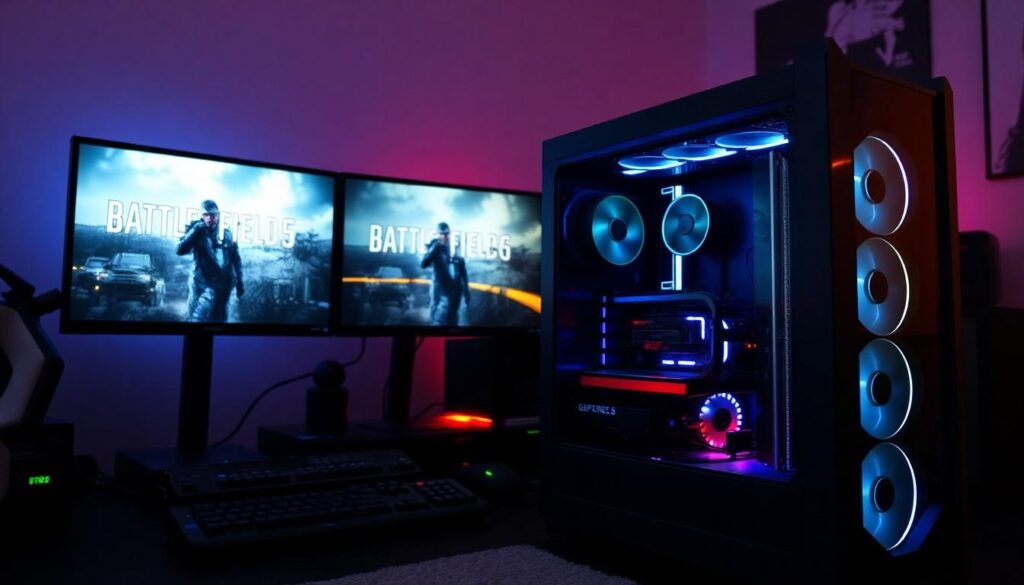
Understanding the minimum system requirements for Battlefield 5 ensures players can experience the game effectively. Meeting these specifications allows for basic functionality without compromising gameplay quality.
Processor Requirements
The minimum processor requirement is an Intel Core i5 6600K or an AMD FX-8350. These CPUs provide enough power to handle the game’s essential processes. A faster processor enhances overall performance, leading to smoother gameplay in intense situations. Players with a stronger CPU may enjoy higher frame rates and improved responsiveness during battles.
Memory Requirements
At least 8 GB of RAM is necessary to run Battlefield 5. This amount of memory helps the system efficiently manage game data during play. Surpassing this minimum will facilitate better multitasking, especially if background applications are running. Upgrading to 16 GB of RAM may significantly improve performance and reduce load times.
Graphics Card Requirements
For the graphics card, players need a minimum of an NVIDIA GeForce GTX 660 or an AMD Radeon HD 7850. These GPUs allow for decent visuals and frame rates. Enhanced graphics performance becomes apparent when using more powerful options, such as the NVIDIA GeForce GTX 1050 or AMD Radeon RX 560. Investing in a better graphics card results in stunning environments and improved aesthetic quality.
Storage Requirements
Battlefield 5 requires a minimum of 50 GB of free storage space. This amount accommodates the base game and necessary updates. Solid State Drives (SSDs) lead to faster load times compared to traditional Hard Disk Drives (HDDs). Utilizing an SSD results in quicker launch times and a smoother overall gaming experience.
Recommended System Requirements
Having a capable system enhances the Battlefield 5 experience. Meeting or exceeding recommended specs significantly boosts gameplay quality.
Processor Recommendations
An Intel Core i5 8400 or AMD Ryzen 5 2600 processor ranks as ideal for optimal performance. Ensure that the CPU provides enough power for tactical decision-making and rendering capabilities. A processor with six cores complements the game’s mechanics efficiently. Prioritizing higher clock speeds improves frame rates during intense battles. These choices deliver smoother gameplay and improved multitasking.
Memory Recommendations
Aim for a minimum of 16 GB of RAM to allow for seamless performance. This amount supports multitasking and enhances system responsiveness. DDR4 memory offers faster data transfer rates, which optimize overall gameplay. Systems with 16 GB guarantee stability during large-scale skirmishes. Expanding to 32 GB modernizes the rig further, handling future updates and increasing frame rates.
Graphics Card Recommendations
Players should consider the NVIDIA GeForce GTX 1060 or AMD Radeon RX 580 for better visual fidelity. Both options provide essential performance improvements over minimum requirements. These graphics cards deliver impressive frame rates and stunning graphics. Optimal resolutions often accompany these GPUs, enhancing the immersive experience. Upgrading to more powerful models like the RTX 2060 or RX 5700 furthers visual detail in dynamic environments.
Storage Recommendations
Allocate at least 50 GB of free space for Battlefield 5 installation, with SSDs providing the best experience. Solid State Drives dramatically reduce load times, allowing players to enter battles quickly. Prioritizing NVMe SSDs over traditional HDDs optimizes game performance and system speed. Keeping the storage drive clean and defragmented enhances overall responsiveness during gameplay. Regular maintenance ensures optimal performance, especially during intense gaming sessions.
Game Performance Optimization
Optimizing game performance enhances the Battlefield 5 experience. Various methods improve graphics and responsiveness, ensuring players fully enjoy gameplay.
Graphics Settings Tips
Adjusting graphics settings directly affects performance. Set resolution scaling to 100% for a balanced experience. Players can toggle advanced options like shadows and ambient occlusion to find a suitable balance between visuals and frame rates. Lowering texture quality improves responsiveness without sacrificing too much visual appeal. Many users report smoother gameplay by disabling V-Sync, allowing for higher frame rates. Experimenting with these settings can help achieve the best visual experience while maintaining smooth performance.
System Upgrades for Better Performance
Upgrading system components boosts Battlefield 5 performance significantly. A high-performance CPU, like the Intel Core i7-9700K, supports better multitasking during intense action. Increasing RAM from 8 GB to 16 GB or more enhances loading times and allows for smoother gameplay. Graphics cards such as the NVIDIA GeForce RTX 2060 or AMD Radeon RX 5700 provide superior rendering power, resulting in improved frame rates and visual clarity. Additionally, investing in an NVMe SSD reduces load times, creating a seamless transition between game sessions.
Conclusion
Having the right system requirements is essential for a rewarding Battlefield 5 experience. Players can enjoy the game’s stunning graphics and dynamic gameplay only when their gaming rig is up to par. Whether opting for minimum or recommended specs, understanding these requirements ensures smoother performance and enhanced visuals.
Investing in a capable setup not only improves gameplay but also enhances overall enjoyment. With the right hardware players can immerse themselves in the intense action of World War II battles. As they gear up for combat it’s clear that a solid gaming rig is a worthwhile investment for any Battlefield 5 enthusiast.