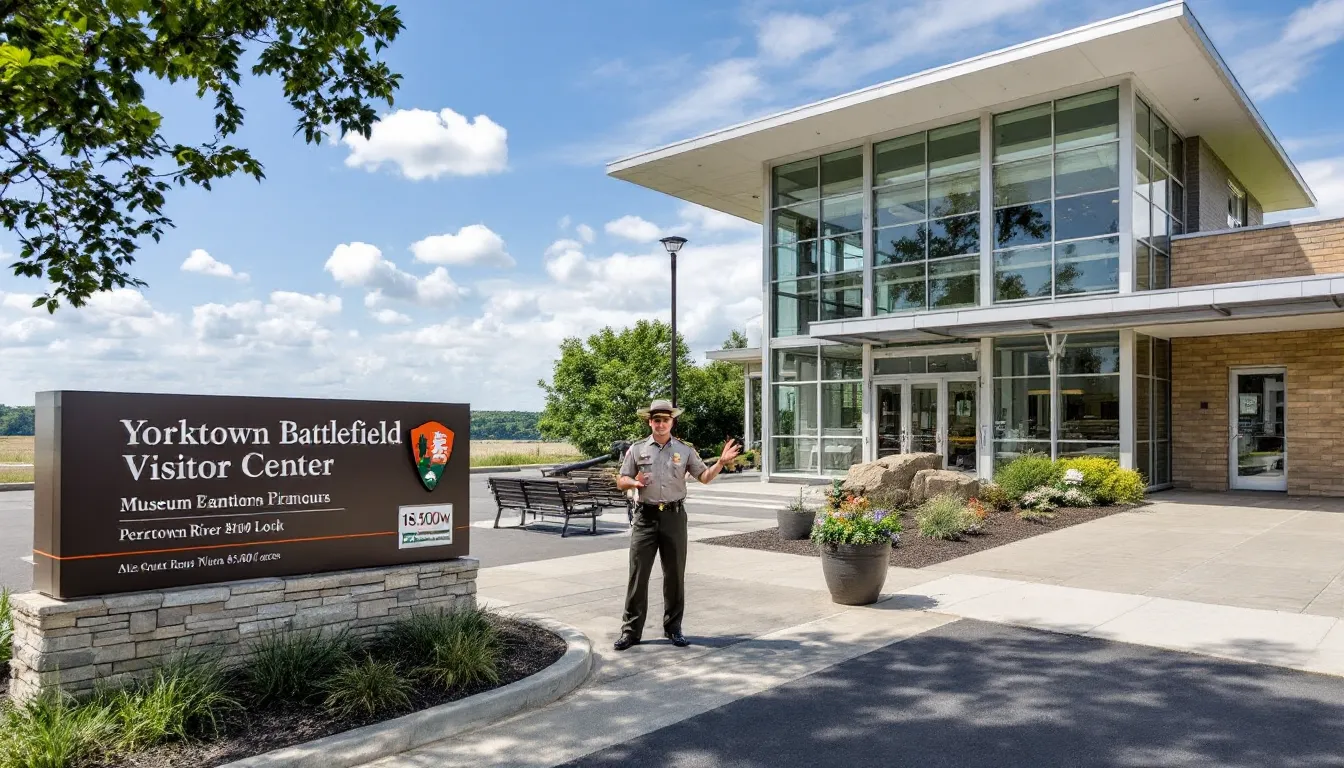
The Yorktown Battlefield Visitor Center stands as one of America’s most important historical landmarks, commemorating the final major siege of the Revolutionary War. Located in Yorktown, Virginia, this destination attracts history enthusiasts, students, and curious travelers eager to understand the pivotal events of 1781. Whether you’re a seasoned history buff or someone just beginning to explore America’s founding era, the Yorktown Battlefield Visitor Center offers an immersive experience that brings the past to life through comprehensive exhibits, authentic battlefield remains, and engaging educational programs. This guide covers everything you need to know about visiting, from the historical context behind the siege to practical tips for planning your trip.
Table of Contents
ToggleKey Takeaways
- The Yorktown Battlefield Visitor Center commemorates the 1781 siege that effectively ended the Revolutionary War, attracting approximately 100,000 visitors annually to this National Park Service facility in Virginia.
- The siege lasted 28 days and demonstrated that American forces, aided by French allies, could decisively defeat British military might, leading to peace negotiations and the Treaty of Paris in 1783.
- The visitor center features a 10,000-square-foot museum with original artifacts, interactive exhibits, a 15-minute orientation film, and hands-on learning experiences that bring the siege to life for all ages.
- Outdoor battlefield trails spanning 8,500 acres allow visitors to walk preserved siege positions, earthen fortifications, and artillery sites—the same terrain where soldiers fought during this pivotal Revolutionary War battle.
- Admission costs $14 per vehicle for a 7-day Colonial National Historical Park pass, with children under 16 entering free, and the center operates year-round with seasonal hour adjustments.
- Plan 2-3 hours for a standard visit or 4-5 hours for comprehensive exploration; spring and fall offer ideal visiting conditions, comfortable walking shoes are essential, and ranger-led walks provide expert interpretation unavailable through self-guided tours.
What Is the Yorktown Battlefield Visitor Center?
The Yorktown Battlefield Visitor Center is a museum and historical complex operated by the National Park Service that preserves and interprets the site of the Yorktown Siege. Part of Colonial National Historical Park, the center serves as the primary hub for understanding one of the most consequential battles in American history. The facility combines museum exhibits, a theater presentation, bookstore, and dining options with direct access to the 8,500-acre battlefield itself.
Visitors can explore indoor galleries filled with artifacts, period weapons, uniforms, and personal accounts from soldiers and civilians who lived through the siege. The Yorktown Battlefield Visitor Center isn’t just about passive observation, it’s designed as an interactive learning environment where guests can engage with history through multiple mediums. From artifacts recovered from the battlefield to reconstructed fortifications, every element tells a story about the determination, strategy, and human cost of the Revolutionary War’s final chapter.
The center receives approximately 100,000 visitors annually, making it one of the most frequented historical sites in Virginia. Whether you arrive for a quick two-hour visit or plan a full day exploring the grounds, the Yorktown Battlefield Visitor Center accommodates visitors of all ages and interests.
Historical Significance of the Yorktown Siege
The Revolutionary War’s Turning Point
The Yorktown Siege, which lasted 28 days from September 28 to October 19, 1781, fundamentally altered the course of the American Revolution. When British General Lord Cornwallis entrapped himself at Yorktown with approximately 7,000 troops, he inadvertently set the stage for the war’s decisive conclusion. The siege demonstrated that American forces, aided by their French allies, could match British military might in a major engagement.
Before Yorktown, many observers doubted whether the Continental Army could defeat Britain’s professional military. The siege shattered that notion. French naval superiority prevented British reinforcements and resupply from reaching Cornwallis, effectively sealing his fate. When Cornwallis surrendered on October 19, 1781, it signaled the beginning of the end for British colonial ambitions in America. Negotiations for peace commenced shortly afterward, culminating in the Treaty of Paris in 1783 that officially recognized American independence.
The victory at Yorktown resonated far beyond military circles. It energized the American cause at home and abroad, convinced foreign powers that American independence was achievable, and demoralized Britain’s war effort. For visitors to the Yorktown Battlefield Visitor Center, understanding this turning point provides crucial context for appreciating the site’s historical weight.
Key Figures and Military Strategies
George Washington commanded the American forces at Yorktown, orchestrating a campaign that required flawless coordination between American and French armies. Washington’s strategic vision, recognizing that Cornwallis presented an opportunity for decisive action, demonstrated the military maturity he’d developed over six years of war. His willingness to leave operations in the South in the capable hands of General Nathanael Greene and march north with the main army showed exceptional judgment.
The Comte de Rochambeau led the French expeditionary force that proved instrumental to success. French soldiers comprised roughly half the assault force at Yorktown, and French naval commander de Grasse’s fleet prevented British relief. This Franco-American partnership represented a diplomatic achievement as much as a military one, managing the coordination between two armies from different nations, speaking different languages, and operating under separate commands required extraordinary leadership.
Cornwallis, even though his reputation as a capable officer, faced an impossible situation at Yorktown. His decision to entrench at Yorktown rather than remain mobile in the interior of Virginia has been debated by historians ever since. Once the American and French armies arrived and French ships blocked escape routes, Cornwallis possessed limited options. The siege itself featured classic 18th-century siege warfare: the construction of siege lines, sapping and mining operations, and concentrated bombardment that gradually tightened the noose.
The enlisted soldiers, both American and French, endured harsh conditions, insufficient food, and constant danger. The Yorktown Battlefield Visitor Center honors these individuals through personal accounts, preserved letters, and artifacts that reveal the soldier’s experience beyond high strategy.
Main Attractions and Exhibits
The Museum and Indoor Galleries
The indoor museum serves as the intellectual centerpiece of the Yorktown Battlefield Visitor Center. The main exhibition hall spans approximately 10,000 square feet and focuses on the Yorktown Siege itself. Exhibits feature original artifacts including weapons, uniforms, personal items belonging to soldiers, and documents from the period. Visitors encounter everything from British and American muskets to French officer’s swords, all positioned within interpretive displays explaining their significance.
The museum’s theater presents a film that provides an excellent overview of the siege before visitors explore the battlefield. This film, approximately 15 minutes long, uses period maps, illustrations, and expert commentary to establish the historical narrative. Many visitors find watching the film before exploring outdoor areas substantially enhances their understanding of the landscape’s military significance.
Interactive timeline displays allow visitors to track the siege day-by-day, understanding how the military situation evolved from September 28 through October 19, 1781. The museum doesn’t shy away from presenting multiple perspectives, including accounts from enslaved African Americans who participated in the siege on both sides (the British promised freedom to enslaved people who joined their forces: the Americans enlisted enslaved soldiers as well).
Battlefield Walking Trails and Outdoor Features
The outdoor battlefield covers 8,500 acres of preserved land, offering multiple walking trails ranging from 0.5 miles to over 2 miles. The main path, suitable for most visitors, takes approximately 45 minutes to complete and passes major siege positions and fortifications. Markers along the trails identify specific locations, explain military tactics employed there, and contextualize what visitors observe in the landscape.
Recovered siege fortifications, including earthen ramparts, artillery positions, and entrenchments, remain visible in the landscape, allowing visitors to literally walk the paths that soldiers traveled during the siege. The American and French siege lines, which gradually tightened around the British position, can be traced across the grounds. An earthwork known as the Hornwork represents a particularly fierce engagement where both sides fought hand-to-hand over strategic ground.
Artillery pieces positioned at various points show the destructive firepower that influenced the siege’s outcome. These cannons, reconstructed to appear as they would have during 1781, stand as monuments to the technological sophistication required for 18th-century warfare. The visitor center provides detailed explanations of how these weapons functioned and their strategic importance.
The landscape itself tells stories. Visitors walk through the same terrain where soldiers marched, dug, fought, and died. The relatively undeveloped acreage preserves the battlefield’s basic topography, allowing visitors to understand how terrain influenced military decision-making. A river overlook shows the waterways that constrained Cornwallis’s position and enabled French control of the area.
Interactive Displays and Hands-On Learning
Beyond traditional exhibits, the Yorktown Battlefield Visitor Center incorporates hands-on elements designed to engage visitors across age groups. Interactive touchscreens allow visitors to explore biographical information about soldiers, officers, and civilians from multiple perspectives. Visitors can compare weapon capabilities, examine how period soldiers prepared food, and understand the daily realities of 18th-century military life.
The center occasionally offers living history demonstrations where costumed interpreters demonstrate period military techniques, musket firing, and military camp procedures. These programs typically occur seasonally and provide visceral understanding of soldier experiences. Watching interpreters load and fire muskets, for instance, illustrates why soldiers were trained to execute complex maneuvers, individual weapons fired slowly and unreliably, requiring disciplined coordination to produce effective firepower.
Museum artifacts are displayed accessibly, allowing visitors to examine details closely. A British officer’s personal letters on display reveal the emotional texture of the siege from a commander’s perspective. Similarly, accounts from enslaved soldiers provide counternarratives to traditional military histories, broadening understanding of who fought and why.
Visitor Information and Amenities
Hours, Admission, and Contact Details
The Yorktown Battlefield Visitor Center operates year-round with seasonal hour variations. From April through October, the visitor center and museum open at 8:45 AM and close at 5:00 PM. During winter months (November through March), hours adjust to 9:00 AM through 4:30 PM. These adjusted hours reflect visitor traffic patterns and seasonal considerations. The facility remains open on most federal holidays, though visitors should verify ahead during holiday weekends.
Admission is included with a Colonial National Historical Park pass, which costs $14 per vehicle for a 7-day pass. Individual visitors and cyclists pay $7 for the same period. Annual passes available for $35 provide unlimited access to both Yorktown and nearby Jamestown Island, another significant colonial site. Children under 16 enter free.
For current information, visitors can contact the Yorktown Battlefield Visitor Center at (757) 898-2410 or visit the Colonial National Historical Park official website. The mailing address is 1000 Colonial Parkway, Yorktown, Virginia 23690. Staff members answer questions about visiting conditions, special programs, and current exhibits during operating hours.
Planning resources are available online, including downloadable maps, self-guided tour information, and current programming schedules. The visitor center website provides detailed information about accessibility features, parking, and facilities to help visitors prepare before arrival.
Facilities and Services Available
The Yorktown Battlefield Visitor Center provides comprehensive facilities for visitor comfort. Free parking accommodates hundreds of vehicles in multiple lots near the main building. Accessible parking spaces near the entrance serve visitors with mobility challenges. Paved pathways from parking to the visitor center accommodate wheelchairs and strollers.
The museum building houses restrooms, water fountains, and climate-controlled spaces. During warm months, these amenities prove essential. Visitors should note that some outdoor trails lack shade, making the facility’s water stations important during summer visits.
A bookstore operated by the park’s nonprofit partner offers books, maps, documentaries, and interpretive materials ranging from children’s books to academic histories. These resources allow visitors to deepen their learning before or after visiting. Prices are reasonable, with most books under $25.
Dining options at the visitor center are limited to a small café offering sandwiches, snacks, beverages, and light fare. Visitors planning full-day visits might consider bringing a picnic lunch, as nearby commercial food options are several miles distant. Picnic areas with tables are available on the grounds.
Accessibility accommodations include accessible restrooms, accessible parking, level walkways from parking to the main visitor center, and wheelchair access to most indoor exhibits. Accessible routes exist for some outdoor trails, though certain areas feature unpaved or uneven terrain. Staff can provide specific accessibility information for particular areas.
Planning Your Visit: Tips and Recommendations
Best Times to Visit and Duration
The optimal visiting experience depends on your preferences about weather and crowds. Spring (April-May) and fall (September-October) offer pleasant weather with comfortable temperatures for outdoor walking. These seasons also feature lower visitor volumes than summer months. Humidity and heat in July and August can make outdoor exploration challenging, particularly for visitors unaccustomed to Virginia’s coastal climate.
Winter visits remain feasible but require warm clothing. The facility experiences fewer visitors during winter months, allowing for more contemplative exploration. Outdoor trails can be muddy or icy depending on weather, so appropriate footwear becomes important.
Allocation of time depends on your depth of interest. A typical visit to the museum, film, and main outdoor trail requires 2-3 hours. Visitors interested in comprehensive exploration of multiple trails and detailed examination of exhibits should plan 4-5 hours. Dedicated history enthusiasts often spend a full day, combining the visitor center with nearby Colonial Williamsburg or Jamestown Island.
Mid-week visits (Tuesday-Thursday) typically involve fewer crowds than weekends. School groups frequent the site during academic-year weekdays, potentially affecting the atmosphere. Summer months bring families and tourists, creating busier conditions.
What to Bring and How to Prepare
Proper preparation enhances the visiting experience considerably. Comfortable walking shoes are essential, as exploring outdoor trails involves uneven terrain and potentially muddy areas depending on recent weather. While main trails are well-maintained, they’re not uniformly paved.
Water is critical, especially for summer visits. While the facility provides water stations, carrying a personal water bottle reduces reliance on limited facilities. Sunscreen and insect repellent prove worthwhile additions, particularly during warmer months when bugs become active.
Layered clothing accommodates temperature fluctuations. Indoor museum spaces maintain constant temperatures, but outdoor exploration involves exposure to elements. A light jacket or sweater proves useful for spring and fall visits even during mild-weather forecasts.
Binoculars enhance appreciation of vistas overlooking the river and surrounding landscape. A camera allows documentation of artifacts and displays, though flash photography is sometimes restricted in museum areas. Families with young children might bring snacks, while the café provides basic food, options are limited for specific dietary requirements.
Advanced research amplifies understanding. Reading about the Yorktown Siege before visiting, even a brief overview, contextualizes what you’ll encounter. Recent historical works like books available at online retailers provide accessible introductions. Some visitors watch documentary films beforehand, arriving with substantial foundational knowledge.
Checking weather forecasts guides packing decisions. Virginia weather remains unpredictable, with sudden temperature shifts common. Waterproof outerwear proves valuable year-round.
For families with children, the visitor center provides educational materials designed for younger visitors. Teachers can arrange group visits with advance notice, and education-specific programs help integrate the visit into curriculum. Children generally find the outdoor exploration more engaging than extended museum time, so balancing indoor and outdoor activities maintains engagement.
Educational Programs and Special Events
The Yorktown Battlefield Visitor Center operates beyond standard museum hours through educational programming and special events. The National Park Service collaborates with historians, educators, and community organizations to provide programming that deepens visitor engagement with the site’s historical significance.
Regular programs include ranger-led walks that provide guided exploration of the battlefield with expert interpretation. These walks, offered multiple times daily during peak seasons, focus on specific aspects: siege tactics, individual soldier experiences, or the role of enslaved people during the siege. Ranger expertise enriches understanding beyond what self-guided exploration provides. Visitors appreciate the opportunity to ask questions and receive nuanced historical perspective.
Seasonal events commemorate significant dates. The siege’s anniversary on October 19 draws increased visitors for special programming and historical reenactments. These events occasionally feature living history demonstrations where costumed interpreters occupy period camps, demonstrating soldier life, cooking, and military procedures. The atmospheric re-creation helps visitors viscerally understand siege conditions.
The visitor center partnered with education organizations to develop curriculum-aligned programs for school groups. Teachers can arrange visits integrated with classroom instruction, and the site provides materials supporting various grade levels and subjects. Field trips to the Yorktown Battlefield Visitor Center remain one of Virginia’s most effective history education tools.
Special lectures occasionally feature historians discussing specific aspects of the siege, American military history, or biographical studies of key figures. These programs, typically offered in the visitor center theater, allow deeper scholarly exploration for visitors seeking advanced understanding. Recent programs have examined the Black experience during the Revolution and women’s roles during the siege.
The visitor center’s publications and online resources extend educational reach beyond in-person visits. A ranger-authored guidebook provides detailed historical context with maps and illustrations. Online archives contain primary source documents, photographs, and scholarly articles accessible to researchers and interested learners. Virtual tours have expanded during recent years, allowing remote exploration for visitors unable to visit physically.
For groups planning educational visits, advance coordination ensures appropriate programming and interpretive resources. School groups particularly benefit from advance arrangement, receiving specialized programs tailored to educational objectives. The park accommodates varying age groups and learning styles through diverse programming options. Gaming reviews from specialized sites sometimes reference historical educational value, though the Yorktown Battlefield Visitor Center’s primary focus remains historical interpretation rather than entertainment.
Conclusion
The Yorktown Battlefield Visitor Center preserves and interprets one of America’s most pivotal historical moments, offering visitors comprehensive understanding of the siege that effectively concluded the Revolutionary War. From indoor museums featuring original artifacts to outdoor exploration of preserved battlefield terrain, the facility accommodates visitors across interest levels and backgrounds.
Whether visiting as part of formal education, personal history interest, or family tourism, the Yorktown Battlefield Visitor Center delivers meaningful engagement with American history. The combination of expert interpretation, well-maintained facilities, and authentic historical landscape creates an environment where visitors genuinely connect with the past.
Planning a visit requires minimal advance preparation, admission is affordable, hours are convenient, and staff members remain helpful to first-time visitors. The historical significance of what occurred at Yorktown in 1781 justifies the journey for anyone interested in understanding America’s founding or 18th-century military history. A visit to the Yorktown Battlefield Visitor Center provides clarity, context, and appreciation for the sacrifice and strategic brilliance that secured American independence.