In the realm of classic RPGs, few titles hold a candle to the charm of Final Fantasy 1. This game isn’t just a nostalgic trip down memory lane; it’s a sprawling world filled with adventure, mystery, and the occasional pixelated monster that looks suspiciously like a potato. Imagine embarking on a quest where every corner of the world map has a story to tell, from the bustling towns to the treacherous dungeons lurking in the shadows.
Overview of Final Fantasy 1 World Map
Final Fantasy 1 features a diverse world map that players can explore freely. The map consists of multiple regions, each offering distinct environments and challenges. Players encounter towns bustling with NPCs, vast fields, dense forests, and treacherous dungeons.
Towns serve as hubs for information, equipment, and healing. Each town features unique shops and services. For instance, Cornelia provides armor and weapons, while Elfheim specializes in magic. Players often return to these towns to restock supplies and receive story-related quests.
Dungeons are scattered throughout the world and house formidable enemies. Each dungeon varies in layout and difficulty. Notable dungeons include the Temple of Chaos and the Marsh Cave, both of which challenge players’ strategic skills. The map also includes hidden areas, such as the elusive Ice Cave.
Regions connect through various pathways, leading to exploration-rich gameplay. These pathways contain encounters with creatures like Goblins and Wolves, enhancing the sense of adventure. Players can also find items and secrets hidden along the way.
The world of Final Fantasy 1 integrates water bodies, such as lakes and rivers, which expand travel options. Players can obtain a ship and later an airship, facilitating exploration of distant lands. This travel system promotes discovery of secret islands and hidden treasures.
This expansive world map contributes significantly to the storytelling experience. The diverse locales enhance the quest’s depth, making every location relevant to the overall narrative. Engaging with the world entails embracing its mysteries and challenges, vital to the game’s enduring legacy.
Key Locations on the World Map
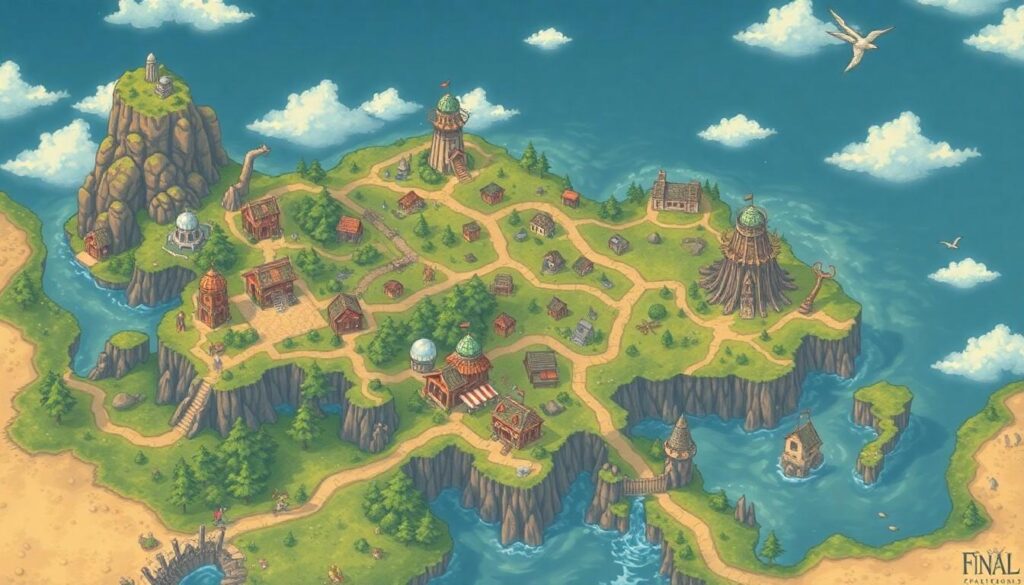
Final Fantasy 1’s world map features essential locations that enhance the gameplay experience and narrative progression. Exploring these areas reveals rich interactions and challenges.
Towns and Villages
Towns serve as essential hubs in Final Fantasy 1. Players encounter Cornelia, which introduces key characters and quest lines. In Elfheim, unique shops offer valuable equipment and healing items. Other locations like Pravoka provide opportunities for gaining information and recruiting allies. Each village contains NPCs that share lore, enriching the game’s narrative. Towns also facilitate rest and recovery, preparing players for the journey ahead. Gathering supplies in these villages becomes crucial for tackling tougher enemies.
Dungeons and Castles
Dungeons in Final Fantasy 1 challenge players’ skills and strategies. The Temple of Chaos stands out as a pivotal location filled with formidable monsters and intricate layouts. Players navigate the Marsh Cave, known for its hazardous traps and hidden treasures. Each dungeon contributes to unique story arcs, often linking to various towns and characters. Castles such as Garland’s Castle house vital plot elements and formidable bosses. Overcoming these dungeons rewards players with experience points and essential items, reinforcing their characters’ growth throughout the adventure.
Features of the Final Fantasy 1 World Map
The world map in Final Fantasy 1 captivates players with its intricate design and varied environments.
Map Design and Navigation
Map design prioritizes exploration and adventure. Players navigate diverse terrains, ranging from lush forests to barren deserts. Each region has its own set of challenges, encouraging strategic planning. Towns serve as key waypoints, providing essential resources and lore. Navigation simplifies with the inclusion of clearly defined paths and landmarks. Additionally, players can easily access hidden areas through diligent exploration. Transitioning between environments feels fluid, allowing seamless movement across the vast landscape. Players engage with the map effectively by utilizing different travel methods, such as walking and sailing.
Secrets and Hidden Areas
Secrets abound within the Final Fantasy 1 world map. Players uncover hidden treasures in secluded locations through keen observation and curiosity. Notable areas, like secret caves and unmarked islands, offer valuable items and experiences. Players often find rare equipment that enhances character abilities and boosts gameplay. Interactions with specific NPCs reveal quests tied to hidden secrets. Some areas require specific conditions to access, promoting varied gameplay. Uncovering these secrets significantly enriches the overall experience, rewarding players with satisfaction and new discoveries. Engaging with hidden areas fosters a deeper connection to the game’s narrative and encourages exploration.
Impact on Gameplay
The world map in Final Fantasy 1 significantly enhances the gameplay experience. Exploration and questing play vital roles, offering players diverse challenges and uncovering hidden treasures.
Exploration and Questing
Players engage in a vast adventure across the map, discovering many secrets. Each region contains unique quests that enrich the narrative. NPCs located in towns and villages provide insight and tips, guiding players toward their next objectives. Players can choose different routes, making every playthrough unique. The flexibility in exploration invites experimentation, allowing players to tackle quests in various orders. Rewarding discoveries, such as rare items and lore, await those who venture off the beaten path.
Iconic Landscapes and Environments
The game features a variety of environments that captivate players visually. Lush forests, eerie caves, and arid deserts create distinct atmospheres. Towns like Cornelia and Elfheim not only serve as safe havens but also showcase unique architectural styles. Players encounter strategic challenges throughout dungeons that connect these iconic landscapes. Each location tells its own story, contributing to the overarching narrative. Dynamic scenery adds depth to exploration, enhancing immersion in the game world.
Conclusion
Final Fantasy 1’s world map is more than just a backdrop; it’s a vibrant tapestry of adventure and discovery. Each region invites players to immerse themselves in its unique environments and challenges. The blend of towns, dungeons, and hidden treasures creates a rich narrative experience that keeps players engaged.
Exploration is at the heart of this classic RPG. Players are rewarded for their curiosity with quests and insights from NPCs, fostering a deeper connection to the game’s story. The diverse landscapes not only enhance gameplay but also contribute to the game’s lasting legacy, making Final Fantasy 1 a timeless adventure for both new and returning players.