Final Fantasy music isn’t just background noise filling the void while you grind for experience points. It’s the emotional backbone of some of the most memorable gaming moments ever created. From the chiptune fanfare of the very first game in 1987 to the orchestral epics of Final Fantasy XVI, the franchise’s soundtracks have consistently raised the bar for what video game music can be. These compositions have transcended their original medium, they’re performed in concert halls, studied by musicians, and instantly recognizable to gamers across generations. The reason Final Fantasy music matters so much is simple: it’s always been integral to the storytelling itself, not just window dressing. Every major story beat, every character moment, every victory gets elevated by the right musical theme. This article explores how Final Fantasy music evolved over decades, the visionary composers who shaped it, and why these soundtracks remain essential listening for anyone who cares about gaming culture.
Table of Contents
ToggleKey Takeaways
- Final Fantasy music evolved from 8-bit chiptune constraints to orchestral masterpieces, proving that artistic quality doesn’t depend on technical resources alone.
- Composer Nobuo Uematsu revolutionized game music by demonstrating that Final Fantasy soundtracks could achieve legitimate artistic legitimacy through sophisticated composition and emotional storytelling.
- The golden age of Final Fantasy music (Final Fantasy VI through Final Fantasy X) established the franchise’s soundtracks as concert-hall worthy art that transcends gaming culture.
- Modern Final Fantasy composers like Masayoshi Soken and Yoko Shimomura are expanding the musical landscape while respecting the foundation, bringing contemporary sensibilities to the franchise.
- Final Fantasy music’s impact extends beyond gameplay, inspiring live orchestral concert tours worldwide and serving as educational reference material for aspiring game composers.
- The success of Final Fantasy music demonstrates that video game soundtracks can function as standalone listening experiences while remaining integral to storytelling and player emotional connection.
The Pioneering Sound Of The Original Final Fantasy Era
When Nobuo Uematsu wasn’t yet a household name in gaming circles, Hiroki Nakamura and Kota Hoshino composed the original Final Fantasy’s soundtrack on the Nintendo Entertainment System. This wasn’t orchestral grandeur, this was pure constraint and creativity. The NES had severe audio limitations: only a handful of channels, tiny memory for sound data, and a technical ceiling that would make modern composers laugh. Yet somehow, Nakamura and Hoshino crafted a soundtrack that felt epic even though these shackles. The Opening Theme became instantly iconic. It’s the kind of melody that lives rent-free in your head decades later, a simple but perfectly balanced progression that screams “adventure ahead.” The track had to do heavy lifting, it needed to establish tone, build excitement, and promise that the player was about to embark on something special. In just a few seconds of chiptune magic, it delivered all three.
What makes these early compositions remarkable is their efficiency. Every note counted because every note consumed precious system resources. Composers couldn’t just throw in extra instrumentation or extend passages for emotional impact. They had to nail the core melody and make it sing within brutal technical constraints. Tracks like “Battle” and “Boss Battle” were workmanlike but effective, simple loops that looped dozens of times during gameplay without becoming grating.
The original Final Fantasy’s soundtrack established something critical: the idea that Final Fantasy themes would be memorable, singable, and emotionally resonant even when reduced to their absolute simplest forms. This principle would carry forward through the entire franchise. Later composers inherited this DNA, the understanding that a great melody doesn’t need complexity, just clarity. The era proved that with smart composition, even 8-bit audio could move players and create lasting emotional connections to a game world.
Nobuo Uematsu’s Game-Changing Contributions To Video Game Scoring
Nobuo Uematsu didn’t invent game music, but he fundamentally changed how the industry understood what it could be. Starting with Final Fantasy III in 1990 and continuing through decades of work, Uematsu brought compositional sophistication that gamers had never experienced before. He understood orchestra, classical music theory, and leitmotif, the practice of assigning specific musical themes to characters, locations, or concepts so that hearing just a few notes triggers emotional recognition.
Uematsu’s breakthrough came with Final Fantasy IV (Final Fantasy II in North America), where his “Prelude” became the new face of the franchise, a serene piano piece that opened a door to a completely different emotional register than the NES-era fanfares. It wasn’t triumphant. It was contemplative, almost vulnerable. This single composition told players that Final Fantasy was evolving, that these stories were going to have depth and introspection alongside the excitement.
His most celebrated early work came with Final Fantasy VI, where Uematsu composed one of the most cohesive and emotionally mature soundtracks in gaming history. Tracks like “Locke’s Theme,” “Terra’s Theme,” and “The Decisive Battle” each captured specific character arcs and emotional states. The Ending Theme remains one of gaming’s most beautiful pieces, a orchestral passage that earned legitimate respect from classical musicians. Uematsu demonstrated that game music could achieve artistic legitimacy without sacrificing accessibility.
Beyond individual tracks, Uematsu’s innovation was in understanding how music shapes player psychology in real-time. A boss fight theme needed to be engaging enough to not annoy players during failed attempts, but intense enough to make victory feel earned. Exploration music needed to be open-ended enough that players didn’t feel rushed, but interesting enough to keep attention. Uematsu cracked this code repeatedly, and other composers have spent decades studying his work to understand how he managed it.
His contributions extended beyond Final Fantasy, he’s scored over 100 games, but the franchise remained his creative playground where he tested new ideas and pushed boundaries. Recent Game Rant coverage of video game composers frequently cites Uematsu as the foundational figure in elevating game music from novelty to art form. His legacy isn’t just individual tracks that became iconic: it’s the proof that video game music could be just as ambitious as film scoring, concert music, or any other musical discipline.
The Golden Age: FF VI Through FF X Soundtracks That Became Classics
If you asked hardcore Final Fantasy fans to identify the “golden age” of the franchise’s music, most would point to a specific era: Final Fantasy VI through Final Fantasy X. This wasn’t coincidence. The SNES and PlayStation generations gave composers more power, more channels, more memory, better audio processing, but that technical upgrade isn’t why these soundtracks matter. The reason is that legendary composers were working at their creative peak, with the tech finally catching up to their ambitions.
Final Fantasy VI (1994) remains the benchmark. The “Nobuo Uematsu Masterpiece” it represented was paired with an unforgettable story, and the two elevated each other. The “Kefka’s Theme” is a masterclass in making a villain menacing through music, discordant but catchy, unsettling but impossible to ignore. The “Waltz of the Flowers” humanized the game’s most tragic character. The “Ending Theme” sent players home emotionally wrung out but satisfied. This is what a complete soundtrack looks like: thematically cohesive, emotionally intelligent, and technically sophisticated.
Final Fantasy VII pushed into mainstream consciousness alongside its iconic “One-Winged Angel”, Uematsu’s most ambitious composition to date. This wasn’t just a villain theme: it was the final boss of video game music itself. Complex, memorable, adaptable to remixing and different arrangements. The track proved that game music could get radio play and concert performances because it was legitimately great music, not just contextually great.
Final Fantasy VIII brought in composer Nobuo Uematsu alongside other talent, delivering the melancholic “Eyes On Me”, the first Final Fantasy theme to be released as a professional pop single. It hit the Japanese charts. A video game music track charted as a professional pop release. That’s the moment the industry realized gaming soundtracks had crossed over completely.
Final Fantasy IX offered perhaps the most whimsical and varied soundtrack in the series. Composer Nobuo Uematsu crafted pieces that felt both classical and contemporary, mixing orchestral sophistication with genuine charm. The “Melodies of Life” and “Vamo Alla Flotta” showed that Final Fantasy music didn’t have to be relentlessly serious to be effective.
Iconic Themes That Transcended Gaming Culture
Final Fantasy X wrapped up this golden age with a soundtrack that embraced full orchestration. Composer Masashi Hamauzu created themes so emotionally potent that the game’s ending remains legitimately devastating. The “To Zanarkand” opening piece still stops players in their tracks, a piano melody that promises both beauty and sorrow.
These soundtracks transcended their games because they told complete stories through music. They weren’t just loop-based background tracks: they had narrative arcs, character development, and thematic consistency. Gamers discussed them the way they discussed storylines and character development. Fans recorded and shared them. Musicians covered them. Concert orchestras added them to their repertoires. When people cite Final Fantasy music as proof that games are art, they’re usually talking about this era specifically. The All Final Fantasy Games Ranked guide reflects how heavily music factored into which entries players loved most.
The Modern Era: Final Fantasy XV, XVI, And Beyond
Final Fantasy XV marked a shift. Yoko Shimomura took over as primary composer and brought a different sensibility, more contemporary in some ways, but equally committed to emotional storytelling. Where previous entries sometimes felt rooted in classical tradition, XV’s soundtrack embraced modern orchestration techniques. Tracks like “Hellfire” and “Omnis Lacrima” were blockbuster-scale music for a blockbuster game.
The shift away from single-composer soundtracks became more pronounced. Modern Final Fantasy games often feature multiple composers bringing their individual voices to different areas and moments. This collaborative approach has both strengths and potential weaknesses. On one hand, it allows for more diverse musical styles within a single game. On the other hand, the thematic coherence that made FF VI or FF X feel like unified artistic statements sometimes gets diluted.
Final Fantasy XVI brought in Masayoshi Soken as lead composer, delivering what many argue is the most aggressively modern-sounding Final Fantasy soundtrack yet. The “Clive’s Theme” is orchestral but grounded in contemporary sensibilities. Battle tracks pulse with intensity that doesn’t rely on melodic hooks the way classic Final Fantasy music did. This represents a generational shift, players raised on modern blockbuster soundtracks appreciate different things than players who grew up with NES and SNES-era melodies.
Contemporary Composers Expanding The Musical Landscape
What’s fascinating about modern Final Fantasy music is that composers aren’t trying to recreate the glory days. Soken, Shimomura, and others working on the franchise recognize their position in a lineage but aren’t attempting to be Uematsu. Instead, they’re exploring what the franchise’s music can be with contemporary tools and sensibilities.
Final Fantasy XIV, which has become a musical playground, features dozens of composers working together. From the serene “Answers” to the aggressive “The Whorleater” boss theme, FFXIV’s soundtrack demonstrates the range modern Final Fantasy music can achieve. Recent updates to Final Fantasy 14 Characters discussions frequently highlight how music shapes the emotional resonance of storytelling moments.
The modern era has also brought franchising opportunities. Final Fantasy soundtracks appear in remixed form across multiple games, collaborations, and arrangements. Younger composers coming into the franchise have studied the classics but aren’t constrained by them. They’re free to experiment with electronic elements, jazz influences, or purely abstract compositions, things earlier eras couldn’t explore.
How Final Fantasy Music Evolved With Gaming Technology
It’s impossible to discuss Final Fantasy music without acknowledging that technology enabled every evolution. The journey from 8-bit to modern orchestral recording directly shaped what composers could attempt and achieve. But it’s also important to recognize that better technology doesn’t automatically mean better music, it just means different possibilities.
The NES era forced composers to think in terms of pure melody and harmony within severe constraints. Every note had to work harder because there were fewer of them. Composers learned to make simple progressions feel epic through clever orchestration tricks and repetition strategies that worked because the melodies themselves were unforgettable.
The SNES generation, starting with Final Fantasy IV, introduced the ability to handle more complex orchestration. Suddenly, composers could layer multiple melodic lines simultaneously, create richer harmonic structures, and simulate orchestral instruments in ways that approximated the real thing. Uematsu and others took full advantage, but they didn’t lose the craft that made NES-era music work. They built on it.
From 16-Bit Melodies To Orchestral Masterpieces
The PlayStation era brought CD-quality audio, which meant composers could finally record actual orchestras and embed the recordings in games. Suddenly, a game’s soundtrack could literally be an orchestra, not a simulation of one. Final Fantasy VII’s “One-Winged Angel” benefited enormously from this, the real instrumentation made the composition land harder than anything from the SNES could achieve.
When Final Fantasy games moved to modern consoles with even more processing power, composers faced a weird choice: they had unlimited technical capacity, but that doesn’t automatically improve music. The constraint of earlier eras forced brilliant solutions. Modern composers sometimes deal with “too many options” syndrome, the ability to do anything sometimes leads to less focused work.
But the franchise also learned to leverage technology intelligently. Modern Final Fantasy games use dynamic audio systems that adapt the soundtrack to gameplay in real-time. A boss battle’s music might shift intensity based on health percentages. Exploration music might change based on time of day, weather, or which region players are in. Technology doesn’t just make the music sound better: it makes the music more responsive to the actual player experience.
The accessibility of high-quality orchestral recording has also enabled franchise entries like Final Fantasy XV and XVI to feature music that honestly sounds like big Hollywood film scores. Whether that’s always an aesthetic win is debatable, but it demonstrates how technology has shifted possibilities. Composers who wanted orchestral authenticity in the SNES era faced impossible obstacles. Modern composers can simply record orchestras. That changes what becomes possible.
Looking at resource sites like Gematsu for game announcements, you’ll see that modern Final Fantasy releases often come with detailed soundtrack information because the music is considered a major selling point. Technology made distribution easier too, fans can now stream and purchase soundtracks instantly, which would have been impossible in earlier eras.
The Rise Of Live Orchestral Performances And Concert Tours
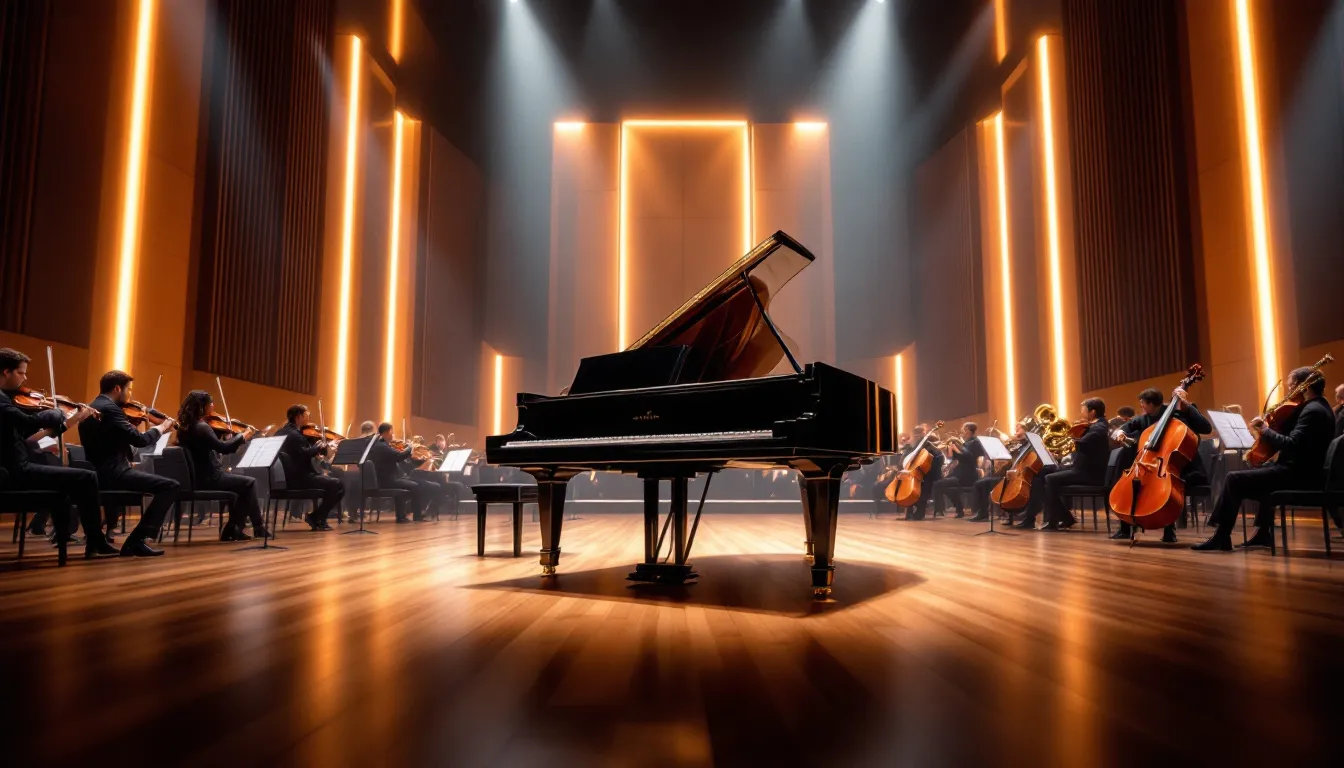
Final Fantasy music’s evolution includes a development that would’ve seemed impossible in the 1990s: major concert tours featuring orchestras performing game soundtracks in concert halls. The “Distant Worlds: Music from Final Fantasy” concert series started in 2007 and continues to this day, traveling the world and selling out venues.
These concert experiences represent the full legitimization of game music as concert-hall worthy art. Orchestras aren’t performing Final Fantasy music as a novelty or side project, these are legitimate concert events with promotional budgets, tour schedules, and serious musicians. The arrangement artists work with composers to create concert versions that honor the originals while giving them space to expand in a live setting.
What’s significant is that these tours aren’t niche events for hardcore fans anymore. They’re mainstream enough to play major venues and attract audiences who might not identify as gamers. Someone might attend a Final Fantasy concert having never played a game in their life, guided purely by the musical experience. That’s a remarkable cultural moment.
The concert series also created feedback loops. Arrangements from concert tours get reintegrated back into games. Players hear official arrangement versions and seek them out. The music becomes part of gaming culture in new ways. A young player might discover their favorite Final Fantasy soundtrack not through the game itself but through YouTube clips of orchestral performances.
Final Fantasy X’s music featured prominently in recent concert series, and newer entries like Final Fantasy XVI are already getting concert treatment. The RPG Site coverage of gaming music often highlights upcoming concert performances because they’ve become significant events in the broader gaming calendar. This feedback loop, games inspire concerts, which inspire deeper engagement with the franchise, has become integral to how modern Final Fantasy soundtracks function in the market.
Why Final Fantasy Soundtracks Remain Essential For Gamers And Music Lovers
Final Fantasy music matters because it refuses to stay in its lane. These soundtracks work as background atmosphere while playing, but they also function as standalone listening experiences. Gamers will genuinely sit down and listen to a Final Fantasy soundtrack like they’d listen to any album, not because they’re required to play a game, but because the music is worth engaging with on its own merits.
This happened partly by accident. Composers like Uematsu were creating what they wanted to create, not optimizing for “standalone listening potential.” But the result is that Final Fantasy soundtracks have unusual staying power. A player might hear a track in-game once but return to it years later, discovering new details they missed. The emotional context of the game gives the music weight, but the musical quality itself provides the substance.
For music lovers who’ve never played a Final Fantasy game, the soundtracks function as windows into game storytelling. Hearing “To Zanarkand” without playing Final Fantasy X is less emotionally impactful than hearing it in-game, but it’s still a beautifully composed piece of music. The composition stands on its own merits. That’s the mark of legitimately great music.
Gamers also appreciate Final Fantasy music because these soundtracks reflect the franchise’s storytelling priorities. A game that allocates serious budget and talent to music is clearly taking its narrative seriously. Players recognize this and respond. Music becomes a signal of quality. When a new Final Fantasy is announced with an established composer attached, that’s news because the composer’s reputation affects expectations for the entire game.
The fact that Final Fantasy soundtracks inspire passionate discussion, ranking favorite themes, debating which era had the best music, analyzing compositional choices, shows they’ve achieved a cultural weight beyond “nice background noise.” Fans study these soundtracks the way music students study classical composers.
There’s also practical value. Gamers studying composition often reference Final Fantasy tracks as examples of effective musical storytelling. Aspiring game composers listen to Final Fantasy soundtracks to understand how to write compelling game music. The franchise’s music became educational material for an entire generation of content creators. The Final Fantasy Fandom community frequently discusses music as central to their connection with the series.
Conclusion
Final Fantasy music’s legacy isn’t accidental. It results from decades of talented composers receiving the resources and creative freedom to treat game music as legitimate art. From the 8-bit constraints of the original game to the orchestral ambitions of Final Fantasy XVI, the franchise’s soundtracks have consistently pushed what gaming music could achieve.
These soundtracks matter because they shaped how the entire industry thinks about game audio. Before Final Fantasy proved that video game music could be genuinely moving and artistically ambitious, the industry often treated music as a minor concern. Uematsu and his peers demonstrated that music could be central to a game’s identity.
The evolution continues. Modern composers like Masayoshi Soken are exploring new territory while respecting the foundation built by earlier creators. Future Final Fantasy soundtracks will inevitably sound different than what came before, but they’ll carry forward the understanding that music deserves serious investment and artistic commitment.
For gamers, Final Fantasy music remains essential listening, not as background accompaniment, but as legitimate art that deserves engagement and study. Whether you’re discovering these soundtracks for the first time or returning to favorites from decades past, the music continues to deliver what made it legendary in the first place: emotion, craft, and the power to elevate stories into something unforgettable.